Gaithersburg, MD · Garage Door Service
Gaithersburg garage door repair for the torsion springs and openers that fail on 1980s-era homes here once winter cold sets into the tracks and hardware.
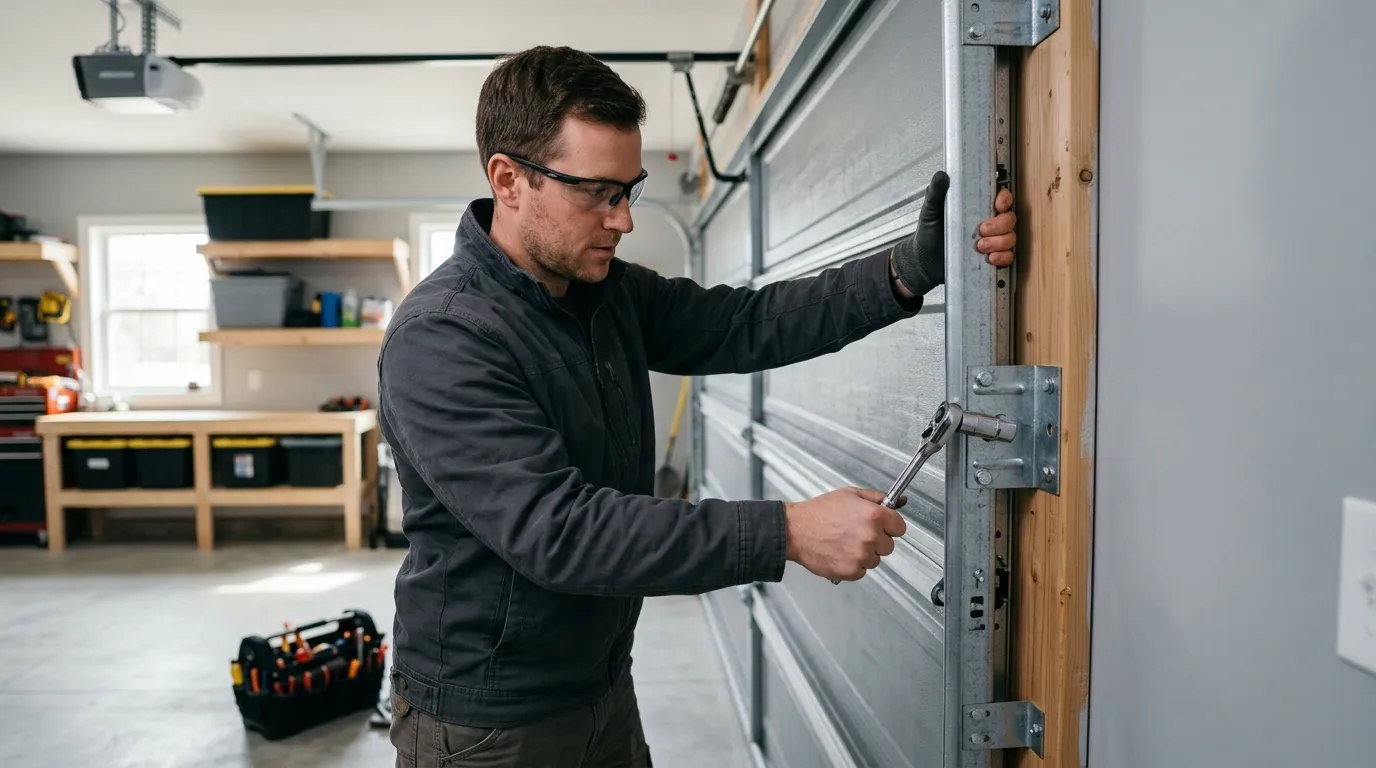
We don't post a flat number here because the job itself decides the cost, not the zip code. A torsion spring swap on a standard double door is a different bill than an opener replacement, and a bent track from a car backing out wrong is different again. What we can tell you is what drives the cost up in this area specifically: a lot of Gaithersburg's housing stock dates to the 1948-2015 build-out, with the bulk of it going up through the 1980s and 90s. That means original springs and openers on plenty of these doors are past the point where a small fix holds. If the spring is original to a house built in that window, you're not patching it - you're replacing it, and the tech will tell you that on the driveway, not after the fact. The honest limitation: we don't quote a price over the phone sight unseen, because a stripped gear and a snapped cable both sound the same to a homeowner ("my door won't move") but cost nothing alike to fix. We look at the door, then we tell you the number.
The call almost always starts the same way: the door stopped halfway, or it won't go up at all, and the owner tries the remote three or four more times before phoning anyone. Every one of those extra tries loads more strain onto whatever already failed - usually a cable that's jumped its drum or a spring that's already cracked but hasn't let go yet. In a cold winter market like this one, metal contracts, hardware gets brittle, and a spring that was ten cycles from failing goes ahead and fails on the coldest morning of the stretch. That's when we get the panic call. Where it goes sideways for real is when someone with a bad spring keeps hitting the opener button - the opener motor was never built to lift a door with no spring tension, and it'll burn out trying. Now you've got two repairs instead of one, and the second one didn't need to happen.
This isn't a generic garage door problem - it's a function of what's actually built here. Housing across this service area runs from 1948 up through 2015, with the median landing around 1980, and most of the named communities nearby - Washington Grove, Montgomery Village, Derwood, North Potomac - carry that same 1980s-90s stock. A garage door spring is rated for a cycle count, not a calendar, but age plus climate stacks the odds against it. This area sits in a cold, severe climate band, and steel torsion springs lose tension and go brittle faster through repeated hard-freeze cycles than they would somewhere mild. A spring installed when a house was built in 1985 has had roughly four decades of Mid-Atlantic winters working against the coil. That's the local math: older stock plus harder winters equals more spring failures per household than you'd see in a warmer, newer market.
Most owners don't call us because they diagnosed a spring - they call because the door is doing something specific. It won't lift past a foot or two before the opener strains and stalls. It slams down instead of lowering smooth. There's a loud bang from the garage before the door refuses to open at all - that bang is very often the spring letting go. Sometimes it's quieter: the door opens fine but the opener light blinks in a pattern nobody can read, or the door reverses itself halfway down for no visible reason. Given the age of hardware common to houses built here through the 1980s and 90s, and the way cold snaps put extra load on aging steel, these symptoms cluster this time of year more than any other. If your door is doing any of that, stop using the opener and call - a spring under partial tension is not safe to keep testing.
Steel torsion springs lose flexibility as temperatures drop, and repeated hard-freeze cycles accelerate metal fatigue. In a cold, severe climate band like this one, a spring nearing the end of its cycle life is far more likely to snap on a cold morning than in mild weather. If your house dates to the 1980s or 90s, the original spring has likely seen decades of this.
If your home was built anywhere in the 1948-2015 range common to this area, especially around the 1980s median, it's worth checking. Older opener motors weren't built for today's heavier insulated doors, and a motor working overtime against a failing spring will burn out faster than it should.
We don't recommend it. A torsion spring under tension can cause serious injury if released wrong, and getting the tension setting off leaves the door unbalanced, which strains the opener. This is one job where the honest answer is: call someone who does it daily.
No, and we won't pretend to. A stalled door could be a snapped cable, a dead spring, or a stripped opener gear, and those repairs cost differently. We look at the door in person before we give you a number.
Call now or request a free quote - same-day service on most repairs, upfront written pricing.