Gaithersburg, MD · Garage Door Service
Gaithersburg homes went up mostly between 1948 and 2015, median around 1980, before insulation codes covered garage doors. Here's what that means for yours in a cold-severe climate.
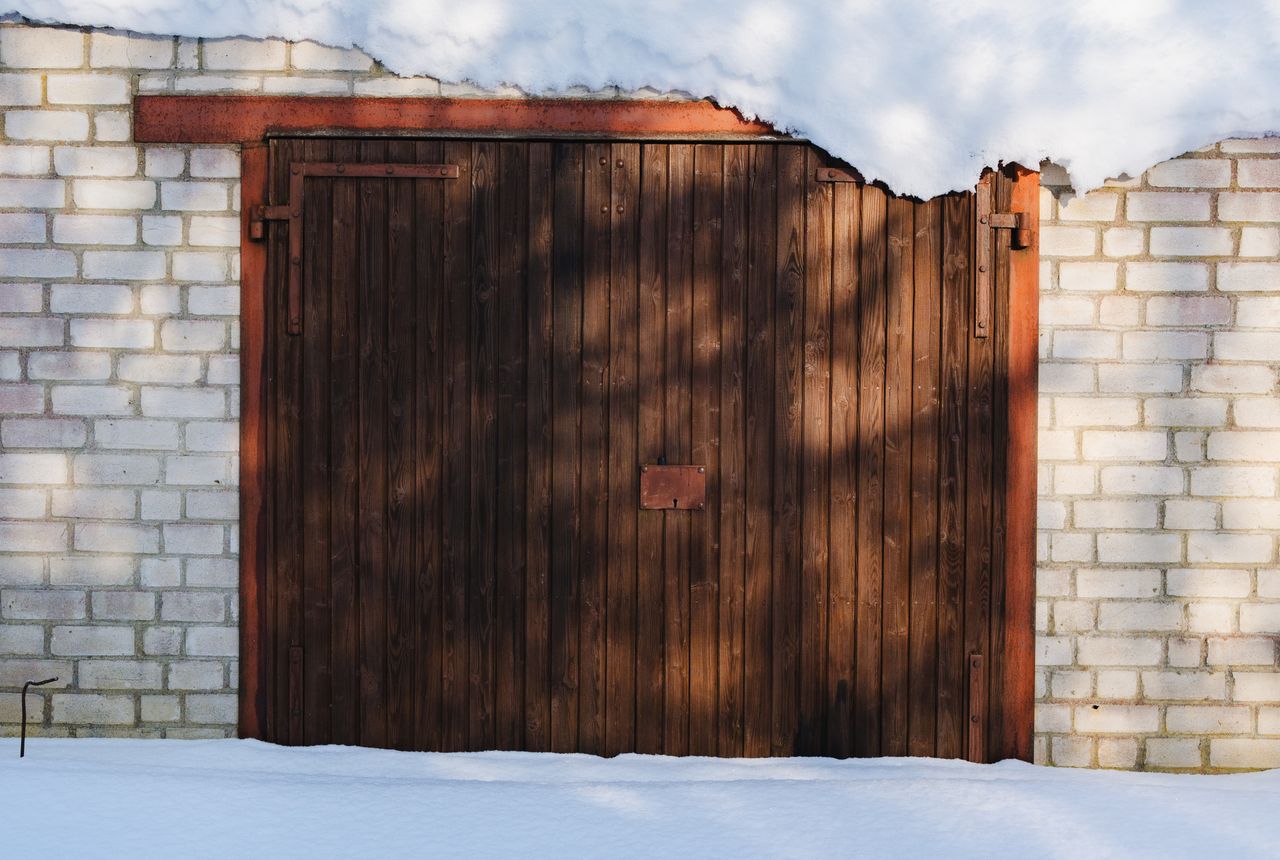
Start by looking at the inside face of your door, not the outside. If it's a flat steel slab with no foam backing and no visible layer between two skins, it's a single-layer door, and in this area that usually means it went up before insulation was ever part of the spec. Most of the housing in this part of Montgomery County was built between 1948 and 2015, with the median landing around 1980 - and across the 56 named areas that make up this service territory, the bulk of the stock is 1980s and 90s construction. That's the exact window when garage doors were framed and hung, but not yet built to hold heat. Push on the door from inside the garage. If it flexes or booms, it's single-layer. Run a hand along the bottom seal too - original rubber from that era is usually cracked, flat, or missing chunks by now, not just old-looking. None of this means the door is broken. It means it was built to a spec that didn't include insulation, and that's worth knowing before you decide what to do about it.
This area sits in a cold-and-severe climate band, and that matters more for a garage door than people expect. An uninsulated steel panel doesn't just let heat leak out - it also lets the metal itself contract hard in a deep cold snap, which is what pulls hinges loose and makes tracks bind right when you need the door most. If your garage shares a wall with living space, an uninsulated door built in that 1980s window is doing very little to stop that cold from moving into the house. It's also why a torsion spring on an older, uninsulated door tends to feel stiffer and set harder in January than it did in October - cold steel loses temper faster than people think. None of this is dramatic. It's slow wear, compounded every winter, on hardware that was never spec'd to fight a cold-severe climate in the first place.
The most common mistake we see is someone assuming their door is fine because it still opens and closes. Opening and closing isn't the same as insulating. A door built in the median era for this area, around 1980, was made to move up and down reliably - nobody was writing an R-value requirement into that spec yet. So when a homeowner replaces a spring or a cable on a 1980s door and calls it good, they've fixed the moving parts but left the panel exactly as thermally leaky as it was. The other mistake is weatherstripping alone as a fix. New bottom seal and side seals help with drafts and water, but they don't add insulation to a bare steel skin. If the goal is actually cutting down on heat loss through the garage, sealing gaps and insulating the panel are two different jobs, and treating them as one is where people spend money without getting the result they wanted.
Here's the honest limit: we can't retrofit foam insulation into every door type, and on some of the oldest slab doors from this area's 1948-2015 building window, the track hardware and panel gauge just aren't set up to take an insulated retrofit kit without extra bracing work. In those cases, patch insulation is a short-term band-aid, and full panel replacement is the real fix - which means ordering to match your track width and drive type, and that's not always a same-day part. We'll tell you straight when a door is a good insulation-retrofit candidate and when it isn't, rather than selling a kit that won't hold up through a cold-severe winter here.
Depends on the door, not just the year. Many doors from the 1980s and 90s common in this area can take a rigid foam retrofit kit if the panel and track hardware are still sound. Some older single-layer slab doors can't take the added weight without extra bracing. We'd need to look at the actual door and track to tell you which situation you're in.
It can reduce heat loss through the garage, especially if the garage shares a wall with living space, which matters in a cold-and-severe climate like this one. It won't turn an uninsulated 1980s door into a modern R-rated one, and we won't claim a specific dollar savings without knowing your setup.
If the panel and track are solid, a foam retrofit kit is often enough. If the door is old enough that the steel is thin-gauge or the track hardware won't take the extra weight, replacement is the more honest answer, even though it costs more up front.
Call now or request a free quote - same-day service on most repairs, upfront written pricing.