Gaithersburg, MD · Garage Door Service
A look at replacing a garage door in Gaithersburg, MD: what the 1980s-era housing stock, severe cold winters, and common opening sizes mean for your choice.
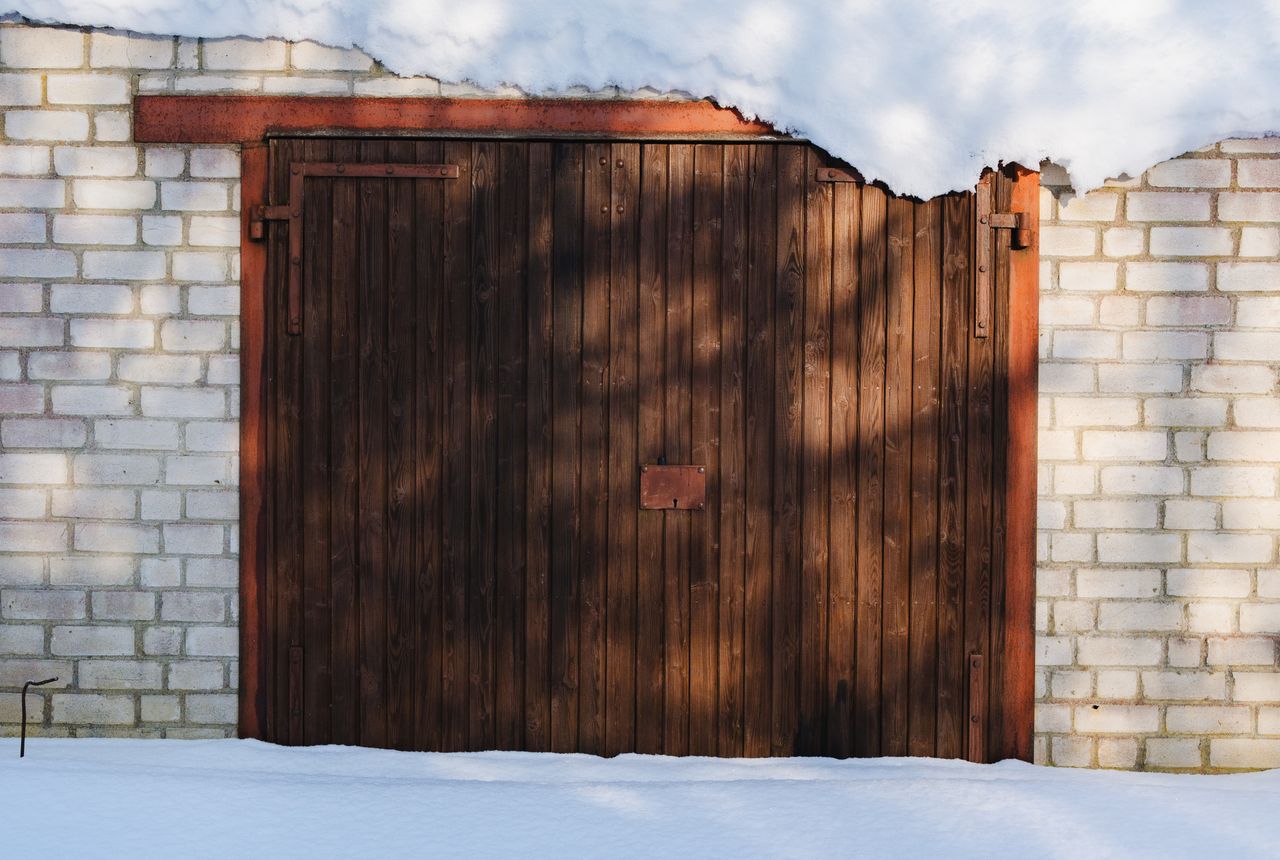
Before you call anyone, pull the release and lift the door by hand. If it's heavy or won't stay up on its own, a spring is going, not the opener. Most houses in this part of the county went up between 1948 and 2015, with the median landing around 1980, and across the 56 named areas that make up this service territory the bulk of what's standing is 1980s and 90s construction. That matters because doors from that era were built to openings that don't always match what's sold today - 16-by-7 is common, but so are odd short openings on split-level garages built into a hillside lot.
Look at the panels for rust bubbling at the bottom seam, check the rollers for flat spots, and run a hand along the track for rust pitting near the floor. If the door is original to a house from that 1980-ish build window, you're looking at hardware that's outlasted its rated cycle count. That's not a reason to panic, it's a reason to measure the opening before you shop, because a replacement door needs to fit what a builder from forty years ago decided was standard - not what a big-box store keeps in stock this week.
This area sits in a climate band rated cold and severe, and that shows up in the door before it shows up anywhere else on the house. Steel contracts in a hard freeze, and a track that was aligned in July can bind by January. On an uninsulated door, the temperature swing between the garage and the house is enough to make an attached garage feel like an icebox, which pushes moisture onto anything stored against the shared wall.
Freeze-thaw cycling is the other piece. Water gets into a hairline gap at the bottom seal, freezes overnight, and by spring that seal is torn and the bottom panel is starting to bow. If you're replacing rather than repairing, an insulated steel door with a tight bottom astragal earns its keep in a winter this cold - it's not an upsell, it's the difference between a door that seats flush in February and one that doesn't.
The most common mistake is buying a door sized for a generic listing instead of the opening actually built into a house from the 1980s stock that dominates this area. A quarter inch off on width or height turns a simple swap into a frame modification job, and that's money nobody budgeted for.
The second mistake is matching springs to the new door's actual weight rather than the number stamped on the old spring. An insulated replacement door weighs more than the bare steel door it's replacing, and hardware sized for the old door will wear out fast or fail outright under the new load.
Third, people skip checking the opener's lift capacity against the new door's weight. An opener that's been fine for fifteen years on a lightweight door can strain and burn out on a heavier insulated one within a season. None of this is exotic knowledge, it's just the stuff that gets skipped when someone's in a hurry to get the garage closed before the next freeze.
Across this service area there are roughly 104,291 owner-occupied houses in a pool of 281,761 households, and a lot of them are sitting on doors installed when the house was built or shortly after. Median household income here runs $139,953, which is part of why insulated steel and better hardware tend to be the norm rather than the exception on replacement jobs in this area.
Here's the honest limitation: if your house has a nonstandard opening from an older build, or a curved track configuration that isn't common anymore, the exact replacement panel can take longer to get than a standard 16-by-7 - that's a manufacturer lead time issue, not something a truck roll fixes. If your springs and rollers are original to a house from the 1980s median build year, replacement is usually the sounder call over patching hardware that's already outlived its rated life. We can walk through options at gaithersburggaragedoorpros.com.
If the panels are cracked, rusted through at the bottom, or bowed from freeze-thaw cycling, repair is usually a stopgap. Given how much of the local housing stock dates to the 1980s median build year, a lot of doors reaching that point are original equipment nearing the end of a normal service life, not victims of one bad incident.
Yes. This area sits in a severe cold climate band, and an uninsulated door will let that cold radiate into an attached garage and the wall it shares with the house. An insulated steel door with a tight bottom seal holds up better through repeated freeze-thaw cycles than a bare panel door.
Often, but not always. Homes built across the 1948 to 2015 range in this area, with construction concentrated in the 1980s and 90s, sometimes have openings that predate today's common sizing. Measure your opening before ordering - it saves a second trip and a frame modification you didn't plan for.
Call now or request a free quote - same-day service on most repairs, upfront written pricing.