Gaithersburg, MD · Garage Door Service
Garage door installation built for Gaithersburg's 1948-2015 housing stock and cold winters. Straight talk on cost factors, common mistakes, and why doors fail here.
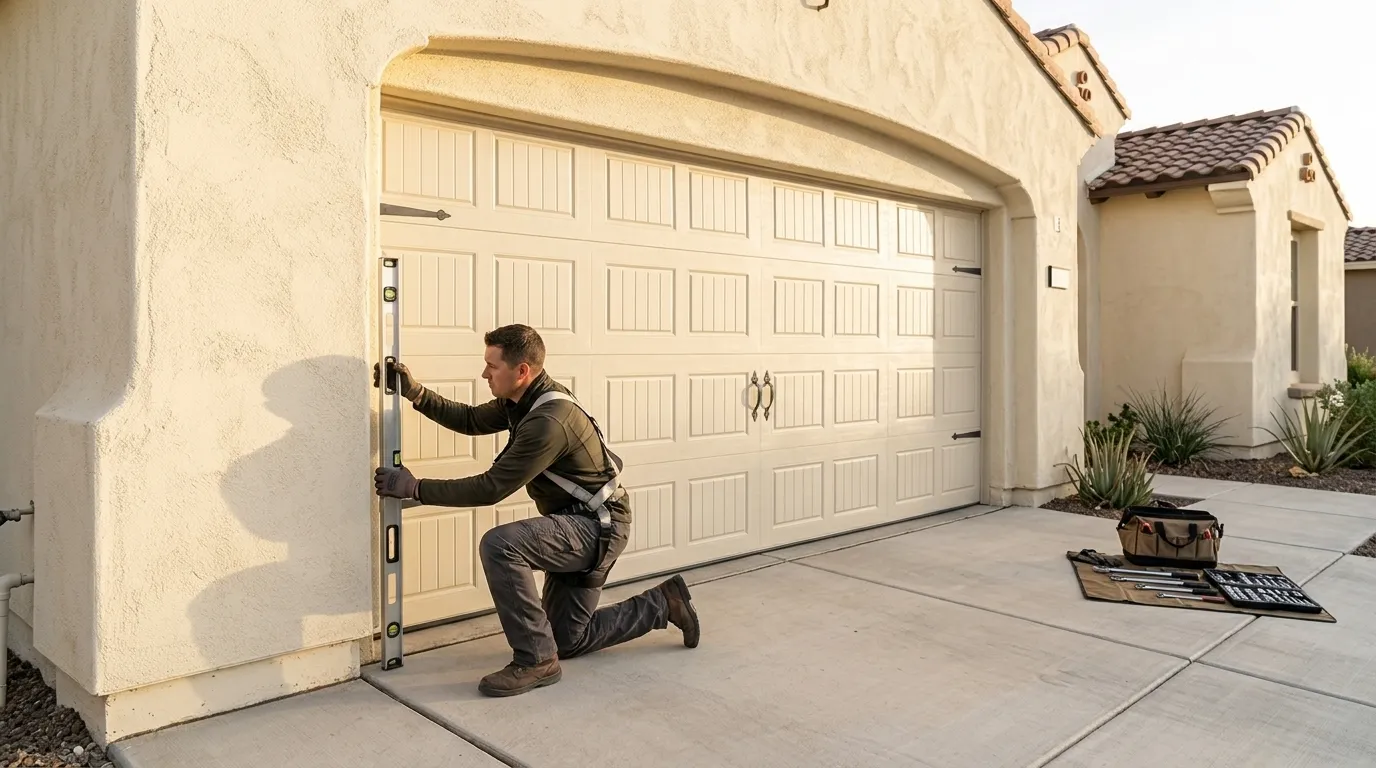
What you pay for a new garage door in Gaithersburg depends on what's already bolted to your house, not just the door you pick out of a catalog. A lot of homes here were built between 1948 and 2015, with the bulk of the stock going up through the 1980s and 90s, so the opening size, the track style, and the wall framing behind the jamb all vary block by block. A house from the 1980s boom often has a standard 16-foot double opening on steel jamb, which keeps install straightforward. Older openings from the 1948-1960s wave sometimes need jamb repair or header reinforcement before a new door can even go in square. We don't quote a number over the phone before we've seen the opening, because the door itself is rarely the variable that moves the price - the carpentry around it is. If your jamb is rotted or your header was never sized for a heavier insulated door, that gets priced separately and we'll tell you before we start, not after.
The most common mistake we see on installs in this area isn't a bad door, it's a mismatched opener install on old track. Homeowners replace the door panel but keep the original rail and drum system from a house built decades ago, because it looks fine. It isn't sized for the new door's weight, and within a winter or two the opener motor is straining on every cycle. The second failure point is insulation choice. A lot of Gaithersburg garages sit under a bedroom or share a wall with living space, and installers who don't ask about that end up putting in a single-layer door on a wall that needed a thermal break. Both of these show up as a call-back six months later, usually right when the cold sets in and the door starts sagging or binding on the track. Neither is a hard fix if it's caught at install. Both are expensive to unwind once the drywall's closed up around a header that was never right to begin with.
This area sits in a cold, severe climate band, and that matters more for garage doors than most people expect. Steel panels contract in hard cold, and on a door installed loose or slightly out of square, that contraction is what turns a minor gap into a stuck roller or a track that binds every morning below freezing. Housing built from the 1948 era through the 1980s median often has garages that were framed to older tolerances, before insulated doors and heavier torsion systems were standard, so the opening itself sometimes isn't square to modern install specs. That's not a knock on the house, it's just a mismatch between 1980s framing and today's heavier doors. When we install here, we shim and square to the current opening, not to the manufacturer's flat-ground assumption, because a door that's plumb on paper but off by a half-inch at the header is exactly what fails first once the cold hits.
The tell we hear most often on the phone is a door that worked fine all summer and now won't seat flush in the frame, or an opener that strains and reverses on cold mornings before eventually catching. That's a door and track responding to a winter that's harder on hardware than most regions see, combined with an opening that was framed decades before anyone speced today's heavier insulated panels. If your door's doing that, it's worth a look before the track wears further or the opener motor burns out trying to force a door that isn't seating right. Not every symptom means replacement - sometimes it's a track adjustment, not a new door - and we'll tell you straight which one it is rather than sell you a full install you don't need.
It depends on your opening and jamb condition more than the door itself. Homes built from the late 1940s through the 1980s often need jamb or header work before a new door goes in. We look at the opening in person and give you a number that separates door cost from any carpentry needed - no phone quotes.
This area sits in a cold, severe climate band, and steel panels contract in hard cold. A door that's even slightly out of square will bind or stick on the track once temperatures drop, especially on older openings framed before modern insulated doors were standard.
Sometimes, but not always. A lot of the openers and track systems from Gaithersburg's older housing stock aren't rated for the weight of a modern insulated door. Reusing them without checking the rating is one of the most common reasons installs need a call-back within a year.
Call now or request a free quote - same-day service on most repairs, upfront written pricing.