Gaithersburg, MD · Garage Door Service
Gaithersburg's 1980s-90s housing stock and cold winters knock garage door safety sensors out of alignment. Here's why it happens and when to call it in.
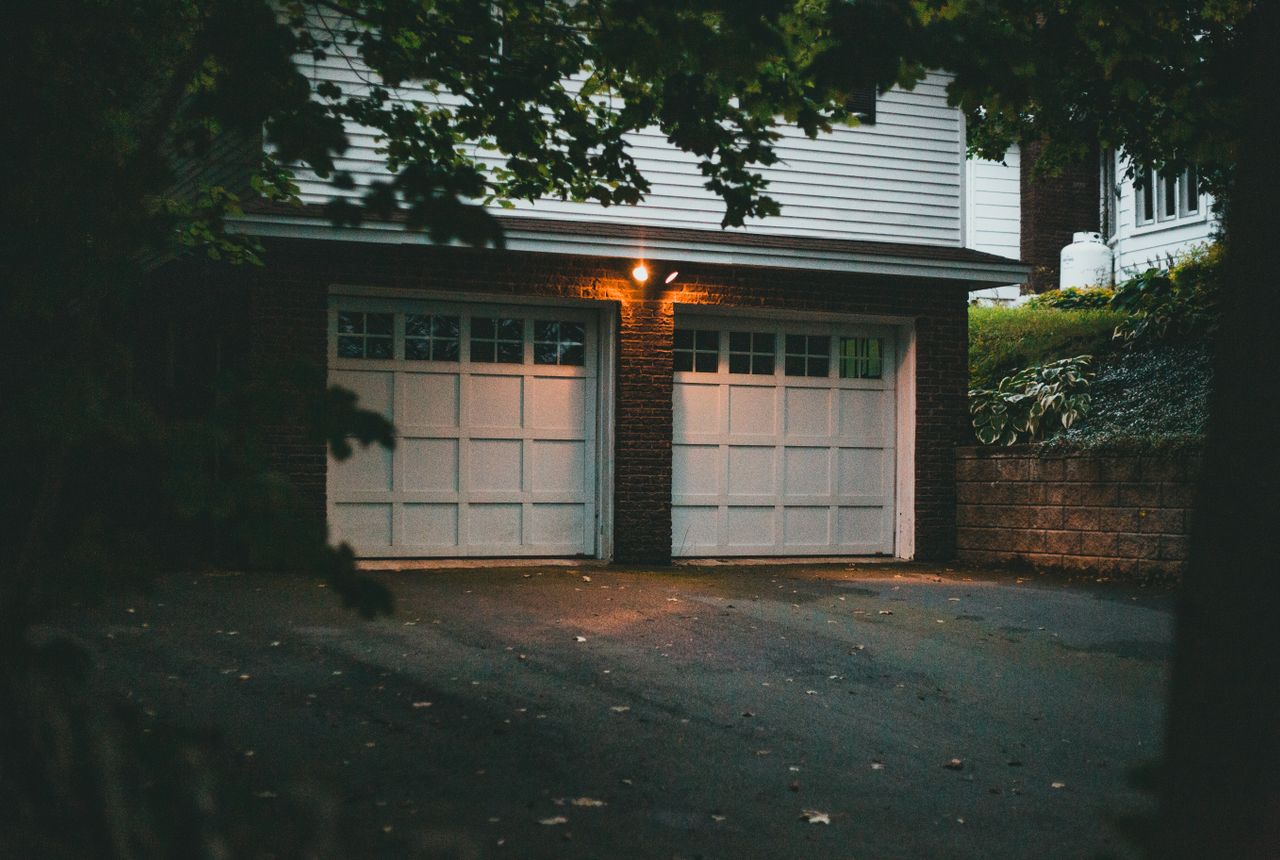
The two small eyes near the bottom of your tracks, roughly six inches off the slab, have to stare at each other dead level. If a bike tire, a stray hose, or just dust on the lens breaks that beam, the door won't close, or it'll reverse halfway down. Start by looking at the LED on each unit. Steady means it's aligned. Blinking means it isn't, and the fix is usually loosening the wing nut on the bracket and nudging it a fraction of an inch until both lights go solid. On the older side-mount brackets common in houses built through the 1980s and 90s here, that wing nut is often rusted or painted over, and the bracket itself can be bent from a lawnmower or shovel clipping it over the years. Wipe both lenses with a dry cloth before you touch anything else - a smear of pollen or slab dust reads the same as a misalignment to the opener's logic board. If the lights won't hold steady after you've cleaned and re-aimed them, the bracket is probably flexing on its own, not from anything you did that day.
Gaithersburg sits in a cold-severe climate band, and that matters more for sensors than most people expect. The slab your garage sits on moves with the freeze-thaw cycle every winter, and a slab that moves even slightly shifts the bracket bolted to it relative to the bracket on the other side, which is usually anchored to the track or the frame instead. Over a season or two that's enough to throw a beam that used to line up perfectly. Houses built in this area's typical 1980s-90s wave, per the local housing stock, often have sensor brackets mounted directly to unfinished concrete rather than to wood framing, which makes them more exposed to that seasonal heave than a newer install would be. Cold also stiffens the plastic housing on older sensor units, so a bracket that used to flex a little and self-correct now holds whatever position the last freeze left it in. You'll usually notice the drift right at the start of winter or right after the first hard thaw, not gradually.
The most common mistake is aiming the sensors at each other by eye and calling it done, without checking that both brackets are actually still tight to whatever they're mounted on. A sensor can look perfectly aligned and still be loose enough to move the next time someone bumps the workbench next to it. Another one: people replace a cracked sensor lens without checking why it cracked, and on a lot of the older concrete-mounted brackets around here, the crack traces back to the bracket vibrating loose and the unit swinging down to hang by its own wire. Folks also assume a sensor problem is an opener problem, since the symptom - door won't close, or reverses for no reason - looks electrical. Nine times out of ten with a beam issue it's mechanical: a bent bracket, a loose bolt, or a buildup of grime, not a bad logic board. Swapping the opener's circuit board to fix a sensor alignment problem is money spent on the wrong part.
Here's the honest limit: if your bracket is mounted straight into old, cracked concrete slab, no amount of re-aiming holds for long. The fix that lasts is re-anchoring the bracket into solid material, sometimes with a new anchor point entirely, and that's a job with a drill and masonry bit, not a wing nut. We don't recommend chasing seasonal drift twice a year forever - past a certain point of slab movement, the smarter move is a one-time proper remount rather than an annual adjustment call. We're straightforward about that when we see it, even though the quick fix is the easier sell.
Cold-severe winters in this area push the slab through repeated freeze-thaw cycles, and that shifts brackets mounted directly to concrete. The sensors themselves aren't damaged by cold; the surface they're bolted to is moving underneath them, which throws off the beam alignment between the two units.
Yes, for a basic misalignment - clean the lenses, loosen the wing nut, and adjust until both LEDs go solid. It only becomes a bigger job if the bracket itself is loose, bent, or mounted into cracked concrete, in which case re-aiming won't hold.
It can. A lot of homes built in that era around Gaithersburg have sensor brackets anchored straight into unfinished concrete rather than wood framing, which makes them more exposed to slab movement from seasonal freeze-thaw than a newer mounting setup.
Usually, yes - a blinking LED on either sensor means the beam is broken or misaligned, not that the opener's electronics have failed. Check for dirt on the lenses and a loose bracket before assuming you need a new opener board.
Call now or request a free quote - same-day service on most repairs, upfront written pricing.