Gaithersburg, MD · Garage Door Service
Garage door repair and installation for South Kensington, MD, 12 miles from our Gaithersburg shop. We know the 1950s hardware this area still runs on.
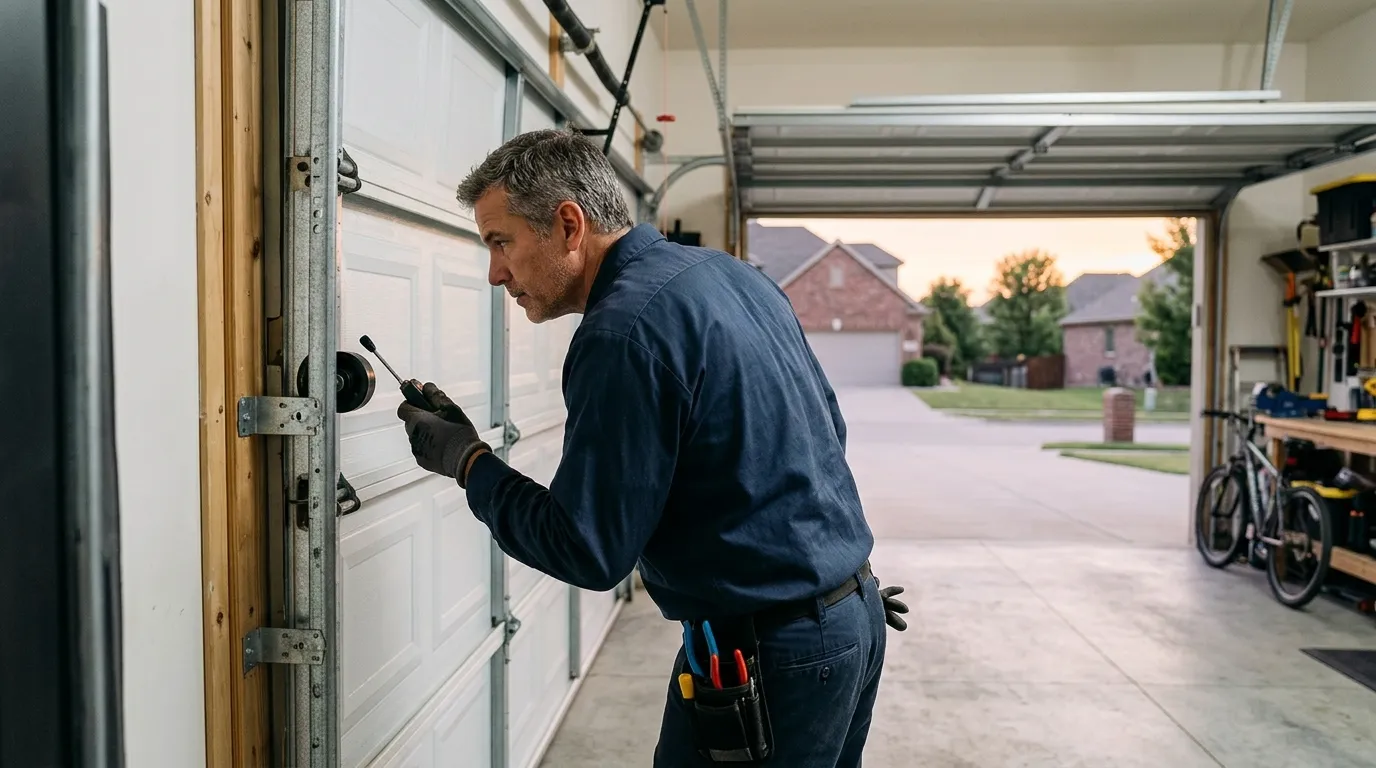
South Kensington sits about 12 miles from our shop in Gaithersburg, down past Garrett Park and North Kensington on the way in. It's one of the farther stops on our board, so when a job comes in from this area we build the route around it rather than treating it as a quick add-on. We're not going to pretend we've got a truck parked around the corner - we don't have a depot here, and we won't tell you otherwise. What we will tell you is that the drive doesn't change how the job gets done once we're in your driveway. Same tools, same parts stock on the truck, same diagnosis process we run everywhere else in the county.
The distance matters mostly for scheduling. If you're calling about a spring that let go on a Tuesday morning, we're realistic about when we can get there rather than promising something we can't back up. What we can promise is that once we're on site, the work gets the same attention as a call two miles from the shop.
The median home in South Kensington was built around 1956 - a good two decades before the median for our whole coverage area, which sits closer to 1980. That gap matters more than it sounds like it should. A door installed or replaced during a 1950s-era build, or on the original opening from that era, is more likely to run on a narrower track, older jamb hardware, or a torsion setup that's been retrofitted more than once over the years.
We see fewer of the wide-opening, insulated steel doors that came standard on the 1980s-and-later construction that dominates most of our other stops, and more openings sized for a single car or an early two-car garage that's been squeezed to fit a modern door. That mismatch is often the real reason a door binds, drags, or won't seal - not a bad opener, but hardware fighting an opening it wasn't built for. When we're called out here, we check the opening dimensions and the track age before we touch the spring or the opener logic board.
South Kensington runs about 2,836 households, and the median household income here is $193,793 - well above the roughly $139,953 median across our broader service area. That income gap tends to track with what people ask for: more requests for insulated doors, quieter belt-drive openers, and full replacements rather than patch repairs, since the budget for doing it right the first time is usually there.
Winters here still fall under the same cold, severe climate band as the rest of our coverage area, so the cold-weather failures - stiff torsion springs, brittle weatherstripping, openers that struggle on sub-freezing mornings - show up regardless of when the house was built. But on a 1956-era garage, cold makes an aging hardware problem worse faster than it would on a newer install. We don't sugarcoat that: an older opening under stress from freeze-thaw cycles is going to need attention sooner than a comparable door from the 1980s stock nearby.
On calls into South Kensington, the two jobs we run most are torsion spring replacement on older single-track doors and full door swaps where the existing unit is original enough that patching it isn't worth the labor. We're honest when a repair isn't the better move - if the track is bent past true and the door is from the original 1950s opening, we'll tell you replacement saves you a second service call within the year, not sell you a fix that won't hold.
Opener upgrades come up often too, mostly because a lot of these openers predate the safety-sensor requirements that are now standard, and homeowners want that updated when they're already paying for a service call. What we don't do here is guess at parts availability sight unseen - older hardware sometimes means a part isn't something we carry on the truck, and we'll say so on the call rather than after we've shown up.
No. We work out of Gaithersburg, about 12 miles away, and drive out for jobs in South Kensington. We don't keep a local depot or promise a response time we can't back up from that distance, but the job itself gets the same process as any other stop on our route.
Older torsion hardware and narrower openings from that era don't handle cold as well as the wider, insulated doors common in newer construction. Our whole service area sits in a cold, severe climate band, but a 1956-era setup tends to show freeze-related strain - stiff springs, cracked weatherstripping - sooner than a comparable 1980s or newer install.
Depends on the door. If the track and opening are still true and only a part failed, repair usually makes sense. If the opening is original to a 1956-era build and the track is bent or the hardware is obsolete, we'll usually tell you replacement is the better spend, since patching it often just delays a second call.
Call now or request a free quote - same-day service on most repairs, upfront written pricing.