Gaithersburg, MD · Garage Door Service
Garage door repair and install for Monrovia, MD homes built mostly around 2015. Gaithersburg Garage Door Pros travels the 15 miles out to fix modern doors and openers.
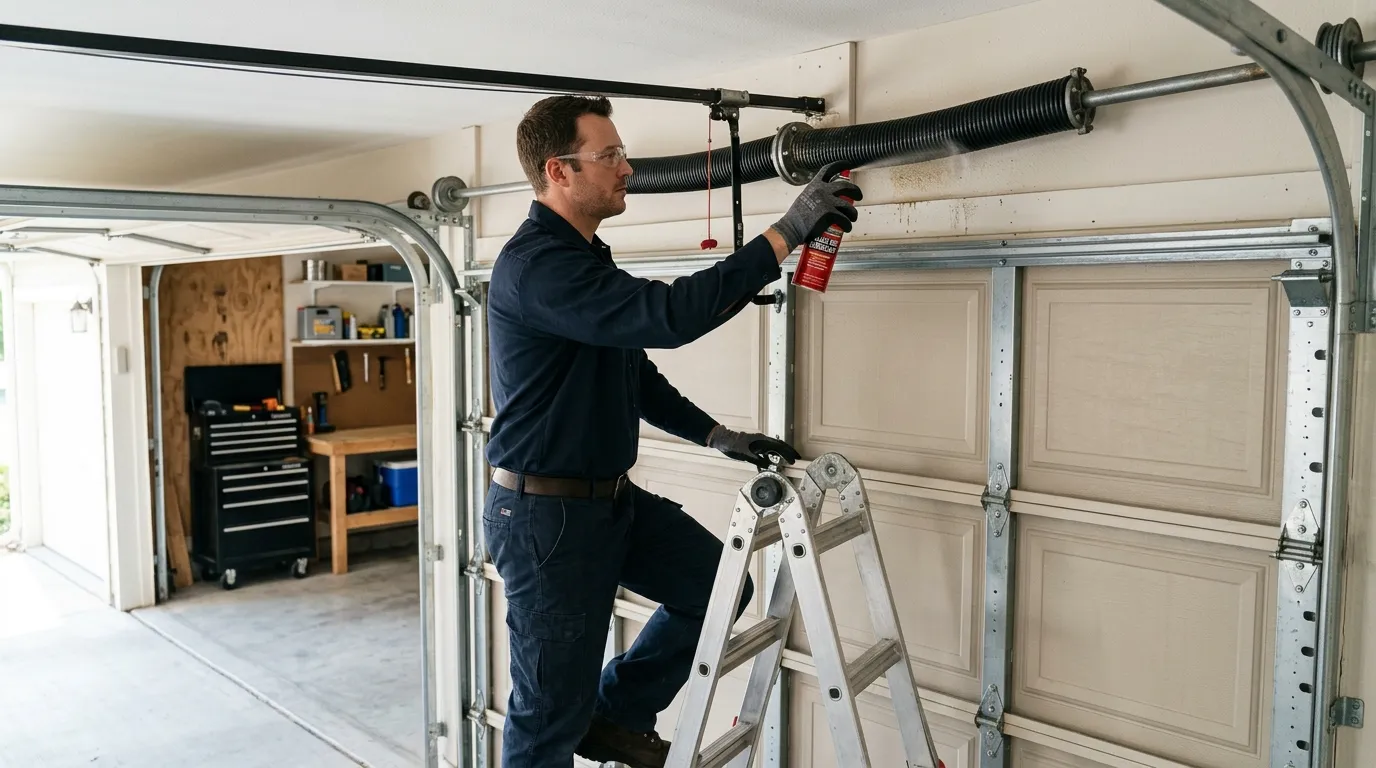
Monrovia sits about 15 miles out from our shop in Gaithersburg, which puts it at the far edge of where we run trucks. We don't have a depot out there and we're not going to pretend we do. What that means for you is straightforward: we schedule the drive, we don't wing it. If you call about a broken spring on a Tuesday morning, we're working out the route with whatever else is on the board for that side of the county, not showing up in twenty minutes.
The honest tradeoff is response time. If your opener dies at 11pm on a Friday, we're not the fastest option purely on distance. If you can give us a same-day or next-day window, the trip out is routine and the work doesn't suffer for the mileage. Most of what we get called for in this area isn't a five-alarm emergency anyway - it's a door that's started grinding, a sensor that's gone flaky, or a spring that's clearly on its way out and the owner wants it handled before it snaps.
Here's the thing that actually matters for your door: Monrovia's housing stock runs younger than most of what we service. Median build year here lands around 2015 - call it three and a half decades newer than the 1980 median across the wider service area. That's not a small gap. A door and opener installed in 2015 or later is a different animal than the one-piece slab doors and drum-hardware setups still common on older streets closer to Gaithersburg.
What you're mostly dealing with instead: sectional steel doors on torsion springs, openers with photo-eye safety sensors already wired in, and in a lot of cases battery-backup units since that became standard practice around when these houses went up. The failure points are different too. Instead of "replace the whole spring system because nobody stocks the old hardware," it's more often a logic board acting up, a wall console losing connection, or weatherstripping and rollers wearing out on schedule rather than the door itself being obsolete. Newer doesn't mean maintenance-free - it means different parts fail first.
Monrovia is a small pocket - about 872 households - and it reads as newer construction almost across the board, consistent with that 2015 median build year. Median household income here runs $234,712, well above the $139,953 figure for the service area we cover out of Gaithersburg. That combination shows up in the doors themselves: more insulated steel and composite doors, more custom widths and carriage-style overlays, fewer bare single-layer panels.
The cold-climate building standard that applies across this whole region (this is a severe-cold band, not a mild one) means insulation and weatherstripping specs were already baked into these doors when they went in, rather than added later as a retrofit. That's a real advantage for a homeowner here - you're not usually fighting decades-old foam that's crumbled to nothing. What you are more likely to run into is a door that was a builder-grade install, meaning the hardware is fine but the opener horsepower or spring sizing was chosen to hit a price point, not matched to the door's actual weight.
Given the age and income profile out here, the calls we get from Monrovia skew toward opener electronics - logic boards, remotes losing sync, wall consoles that stop responding - more than the raw spring-snap calls we see on older streets. We also get a fair number of calls on wider doors and heavier insulated panels where the original spring was undersized for the door's actual weight, which shows up as a door that's hard to lift by hand or an opener straining on every cycle.
We do standard repairs: springs, cables, rollers, track alignment, opener replacement and sensor troubleshooting. What we don't do is chase a five-year-old door with a full replacement recommendation just because a service call turned up one worn part - at that age, in this housing stock, a targeted repair is almost always the right call over a full swap. Full replacement makes sense when the door itself is damaged or the model's parts are genuinely discontinued, not as a default upsell.
Age isn't really the driver here - usage and setup are. A door installed around 2015 can still have an undersized spring for its actual weight, a wall console that's worn out from daily use, or sensors knocked out of alignment. Newer hardware fails less from age and more from mismatched sizing or normal wear on moving parts.
No. We run out of Gaithersburg, about 15 miles from Monrovia, and travel out for scheduled jobs. We don't stage a truck locally, so same-day emergency calls depend on what's already on the schedule for that day.
If your house was built around 2015 like most of this area, the door likely met current cold-climate insulation and weatherstripping standards when installed. Worn seals or a damaged bottom panel can still let cold air in regardless of age, so it's worth a look if you're feeling a draft at the base of the door.
For houses this age, a repair is usually the right first move - logic board or sensor issues rarely mean the whole unit is bad. Replacement makes more sense if the opener is a discontinued model with no parts available or if the motor itself has failed, not just the electronics.
Call now or request a free quote - same-day service on most repairs, upfront written pricing.