Gaithersburg, MD · Garage Door Service
Kensington homes mostly date to 1959, a generation older than the Gaithersburg average. We drive 11 miles out to work on the springs, tracks, and openers that era actually has.
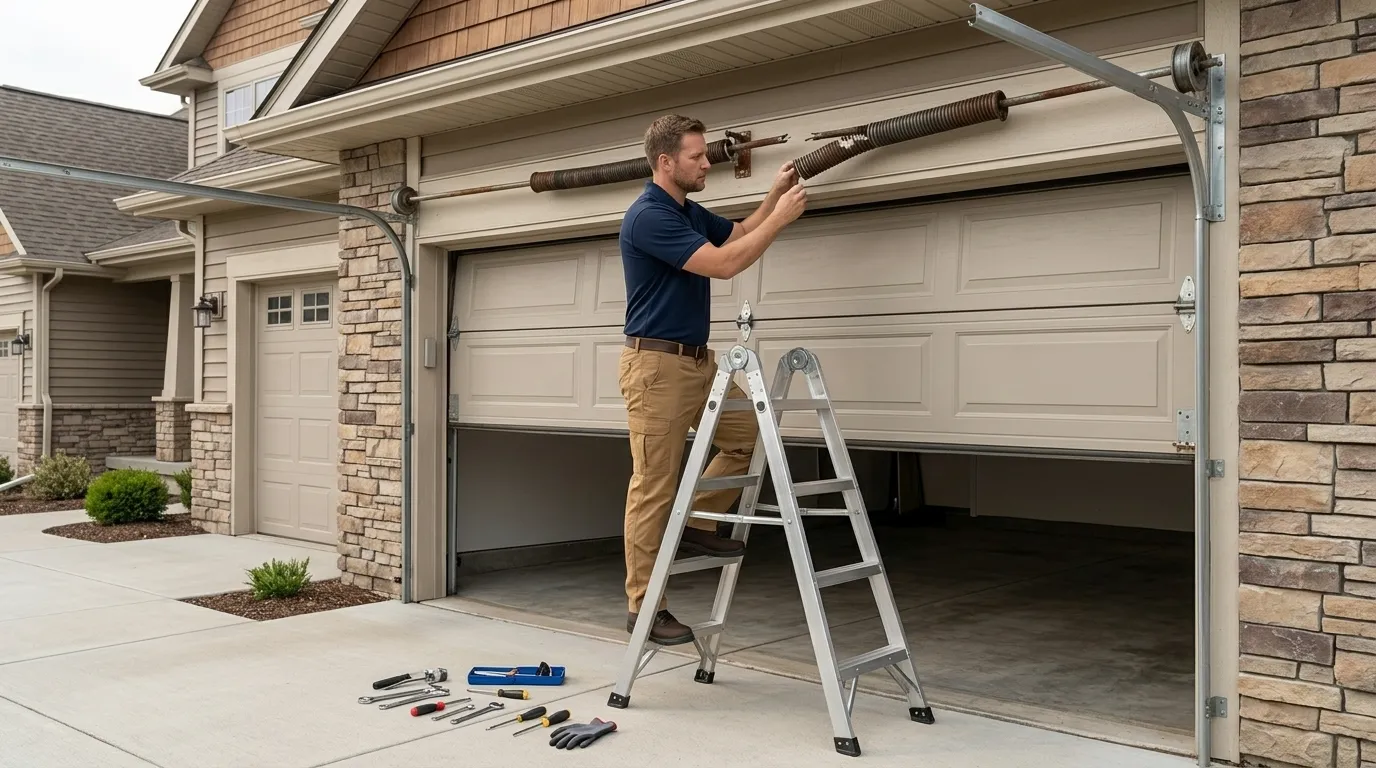
We run out of Gaithersburg, about 11 miles down to Kensington, which puts it toward the far end of the areas we cover. It's not a same-hour promise and we won't pretend otherwise - a call from Kensington goes on the route the same way a call from anywhere else in our territory does. What it does mean is that when we get there, we're not guessing at what we'll find. Kensington's 828 households sit in a pocket that's noticeably older than most of what we see closer to home, and that changes the job before we even open the truck.
The area's median household income runs $149,698, higher than the wider service area's $139,953, which tends to track with owners who've kept up on maintenance rather than let a door limp along for a decade. That's useful to know going in - often the call here is a door that's been serviced before, not one that's been ignored, so the fix is usually more specific and less "replace everything."
Kensington's median year built is 1959. Compare that to the roughly 1980 median across the wider Gaithersburg service area, and you're looking at homes that are, on average, two full decades older. That gap matters more than it sounds like it should. A garage built in 1980 usually already has a torsion spring system and a lightweight steel door on rollers sized for it. A garage built in 1959 often started with something else entirely - extension springs on side brackets, heavier wood or early steel panels, hardware that's been swapped once or twice over the decades by whoever was doing garage doors at the time.
What we run into most in a place like this is mismatched hardware: a newer opener bolted onto an old track, or a replacement spring rated for a door that's since been swapped for a heavier one. None of that is unusual for 1959-era construction, but it does mean a straightforward-sounding repair - 'the door won't open' - can turn into diagnosing three different generations of parts stacked on top of each other.
With F3's cold-severe climate classification covering this whole service area, the age of the housing stock intersects with weather in a specific way here. Steel doors and hardware from the late 1950s and 1960s weren't built with the same weatherstripping standards or insulation expectations that later remodels or replacements bring, and after enough winters the seals and tracks on original-era doors show it - stiffness in cold mornings, tracks that have shifted slightly out of plumb as the house has settled over sixty-plus years.
Across the broader service area, F1 shows housing built between 1948 and 2015 with a median around 1980, and F2 notes most of the named areas run 1980s-90s stock. Kensington sits well outside that norm, closer to the earliest end of the range. That's not a knock on the area - older construction here often means solid original framing - but it does mean we don't treat a Kensington call the same way we'd treat one from a newer subdivision. The door in front of us is more likely to be an outlier from the area's own typical stock, not a copy of it.
Given the age profile here, the jobs that come up most are spring replacements on hardware that's outlived its rated cycles, track realignment where decades of settling have pulled things slightly out of square, and opener installs on doors that were never built with an opener bracket in mind. We also see roller replacement more here than in newer areas - steel rollers on older tracks wear differently than the nylon rollers common in later builds.
One honest limit: if a door's frame or jambs have shifted enough from decades of settling, a spring or track fix won't hold for long, and we'll tell you that instead of doing a repair that fails again in six months. Sometimes the right call on a 1959 door is a full replacement rather than another patch, and we'd rather say so up front than bill you twice.
Yes - Kensington's median year built is 1959, while the wider service area (per F1 and F2) centers on 1980s-90s construction. That's roughly two decades older on average, which means more extension-spring setups, older track hardware, and more mismatched parts from past repairs.
No. We work out of Gaithersburg and drive out to Kensington, about 11 miles each way. We don't keep a local presence there, so we're upfront that this isn't a same-hour, around-the-corner service the way it might be for areas closer to our shop.
On a house built in 1959, decades of settling can shift the frame or jambs slightly out of square. If that's happened, a new spring or a track adjustment can work loose again fairly quickly, because the underlying structure - not the part - is the real issue.
Call now or request a free quote - same-day service on most repairs, upfront written pricing.