Gaithersburg, MD · Garage Door Service
Serving Greenbelt homes built mostly in the mid-1970s with springs, openers, and hardware repair. Gaithersburg Garage Door Pros travels the 20 miles to get here.
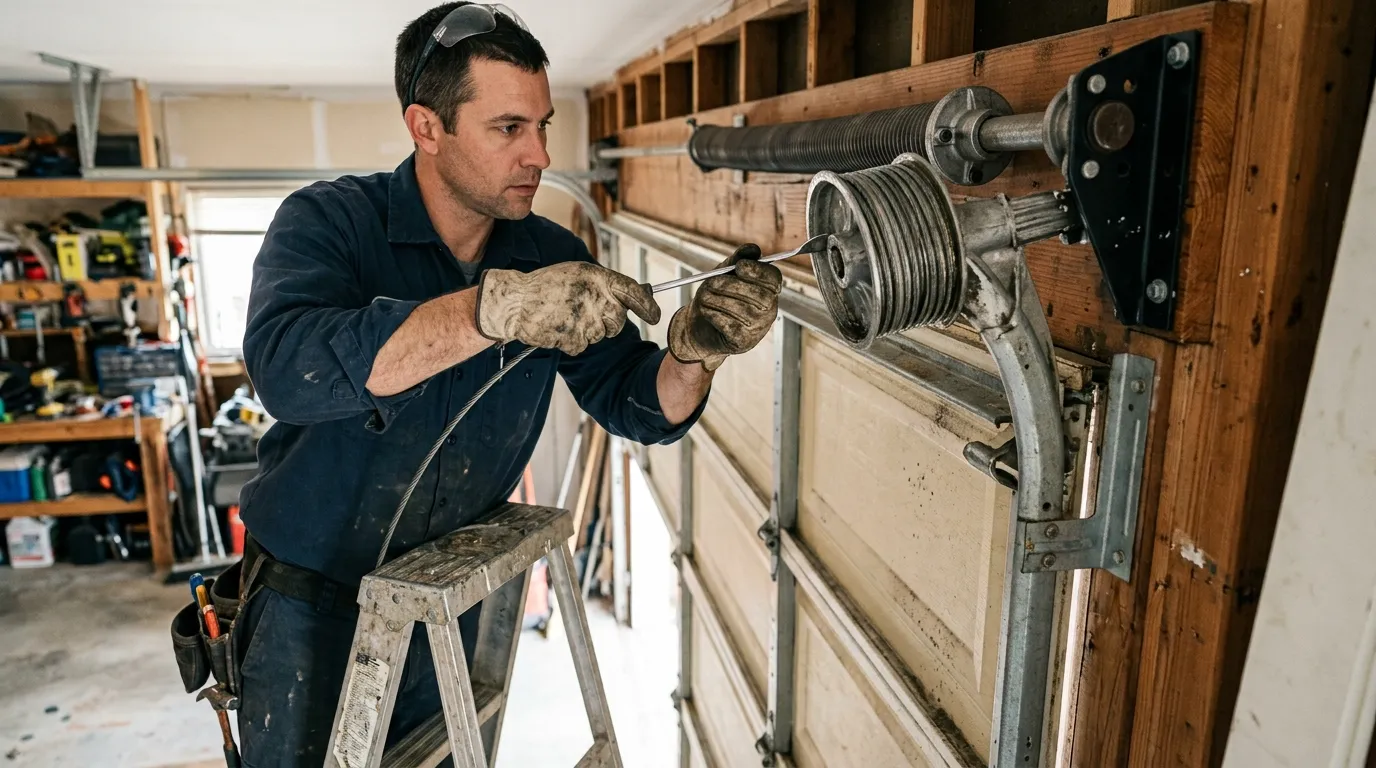
Greenbelt sits about 20 miles from our shop in Gaithersburg, so we're not the guys with a truck idling around the corner. We plan the trip, we bring the parts we expect to need based on what you tell us on the phone, and we don't pretend otherwise. What we can tell you is that the drive doesn't change what we find once we're in your driveway - this area's houses have their own age and their own quirks, and that's what actually decides the job. Winters here fall into the same cold-severe climate band as the rest of the region we work, which matters more for garage doors than most people expect: steel contracts, lubricant thickens, and openers that were fine in October start hesitating in January. That's true whether the house is old or new, but it hits older torsion setups harder, and Greenbelt has a lot of those. We're not going to tell you we've got a crew stationed nearby. We don't. We're telling you what a 20-mile call from Gaithersburg looks like when we get there, and what we're likely to be working on.
The median home in Greenbelt was built around 1976. That's a full generation older than the newer construction spread across the wider service area, where the housing mix runs from 1948 up through 2015 with a median closer to 1980. A door installed on a mid-1970s house is not the same animal as one installed in 2005. You're looking at older torsion spring setups, sometimes single-spring systems on doors that really ought to have two, and openers that have already been replaced once or twice by whoever owned the house before - meaning the bracket, the rail, and the wiring may not all be from the same era or the same brand. Galvanized track from that period pits and rusts differently than the coated track used today, especially after decades of the cold-severe winters this region gets. We see more worn bottom brackets and dried-out rollers on houses from this build era than we do on newer stock, simply because the parts have had forty-plus years to wear instead of fifteen. None of this means the door is beyond saving. It means the diagnosis starts with the age of the house, not a generic checklist.
Greenbelt has roughly 10,499 households, and the median household income here is about $86,352. That number matters less for the technical side of the job and more for how we talk about repair versus replacement: at this income level, a full door replacement is a real decision, not an impulse buy, and we treat it that way. We're not going to push a new door on a homeowner when the spring and a couple of rollers will get another decade out of the existing one. Given the median build year of 1976, most of the doors we'd be looking at here have already outlived their original opener at least once, and the panel itself, if it's original steel, is often still sound even when the hardware around it isn't. That's the honest tradeoff we walk people through - replace the parts that fail, keep the door, unless the door itself is the problem. We won't know which situation your house is until we're standing in front of it, but the housing age here tells us where to start looking first.
Given the build era, the calls we expect most in Greenbelt are torsion spring replacement on doors that are still running original or first-replacement hardware, opener swaps where the unit has simply reached the end of its motor life, and track and roller work where forty-plus years of cold-severe winters have taken their toll on galvanized rail. We also expect more single-spring-to-double-spring upgrades here than we would on newer stock, since that was common practice when these houses went up and it's not what we'd install today. One limitation worth being upfront about: if a panel is original steel from the 1970s and it's dented or rusted through, we may not have a matching replacement panel on the truck, and ordering one can take longer than the repair itself. In that case a full door replacement is often the faster and more sensible call, even though it costs more up front than a patch repair would.
No. We work out of Gaithersburg and drive out to Greenbelt for calls, about 20 miles each way. We don't have a depot or staff stationed here, so we can't promise a same-hour response - we can tell you what we're bringing based on what you describe on the phone.
Greenbelt's median home was built around 1976, which usually means older torsion spring setups and openers that have already been replaced at least once. Diagnosing the door starts with knowing what era of hardware is likely behind the panel, since parts and wiring from that period aren't always compatible with newer components.
Often the panel itself is still sound even after 40-plus years - it's usually the spring, opener, or rollers that fail first. But if an original steel panel from that era is dented or rusted through, we may not have a matching replacement on the truck, and sourcing one can take longer than the repair.
With a median household income of about $86,352 in this area, we treat full replacement as a real financial decision, not a default. If the spring, track, or opener can be repaired and the panel is sound, we'll say so rather than push a new door you don't need.
Call now or request a free quote - same-day service on most repairs, upfront written pricing.