Gaithersburg, MD · Garage Door Service
Serving Garrett Park's 1952-era homes from Gaithersburg, 10 miles out. We know the original hardware these houses shipped with and what cold winters do to it.
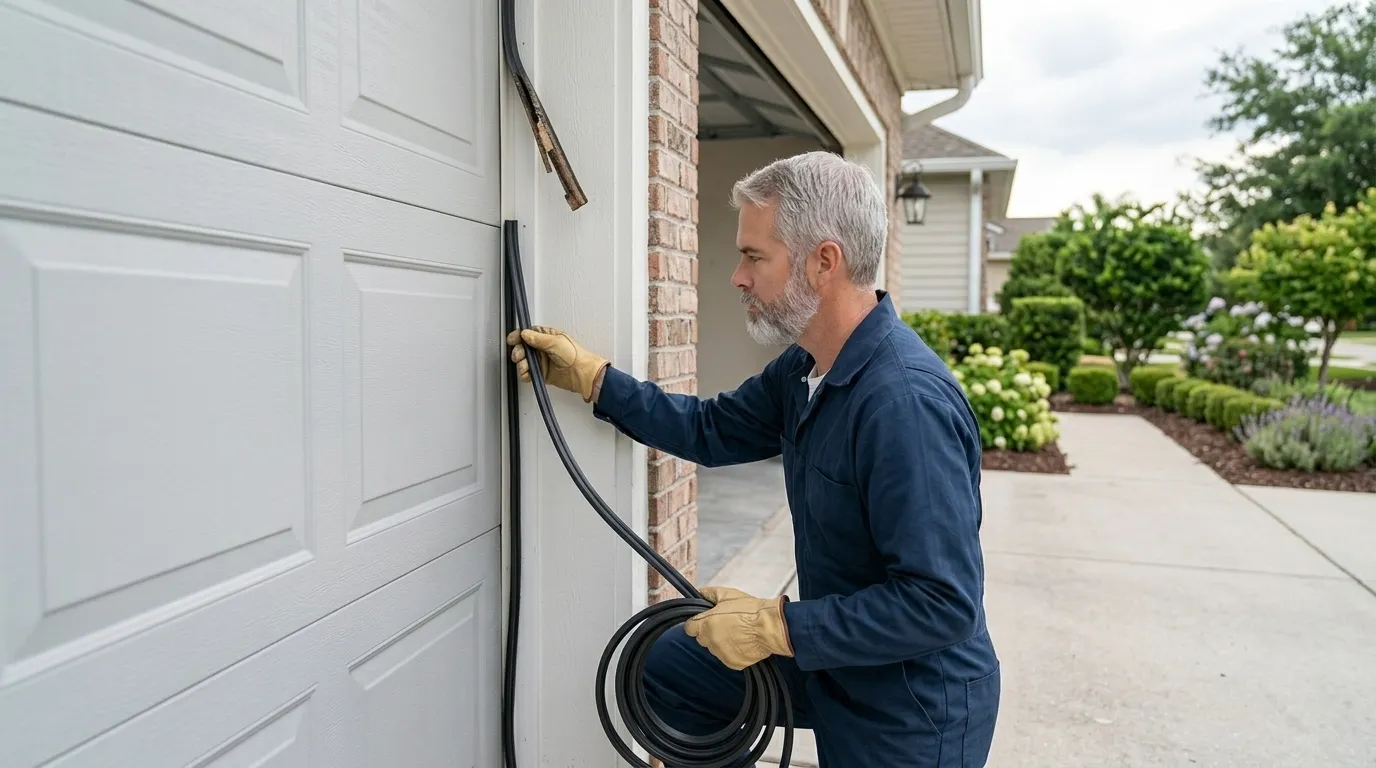
Garrett Park sits about 10 miles from our shop in Gaithersburg, which puts it on the far edge of where we run calls. We don't have a crew stationed in the area and we're not going to pretend otherwise. What we do have is a truck that makes this drive regularly, because Garrett Park is one of the smaller pockets we cover and the houses there tend to need a specific kind of attention.
With only around 320 households in the area, this isn't a neighborhood where a dozen garage door companies are competing for lawn signs. That's part of why the hardware here doesn't get replaced on any predictable schedule - there's less foot traffic from other contractors pointing out worn springs before they snap. When we do come out, we're usually looking at a door that's been running quietly for decades, for better or worse.
The distance means we plan the trip rather than treat it as a quick add-on between other jobs. If you call, expect us to talk through what's wrong before we commit the drive, so the visit counts for something.
The median home in Garrett Park was built around 1952, which is decades older than the 1980 median across the broader service area we work in. That gap matters more than it sounds. A door and opener installed - or replaced once - in a house built in the early '50s is running on track and header framing designed for hardware nobody manufactures new anymore. Extension springs mounted overhead instead of torsion springs on a shaft are common in stock this old, and they fail differently: more suddenly, with less warning creak.
The area also sits in a cold-climate zone with severe winter conditions. On a door with 1950s-era steel and thinner original insulation, that cold does two things: it stiffens grease in rollers and hinges until they bind, and it shrinks metal panels just enough to throw off alignment on tracks that were never dead-level to begin with. You'll notice it as a door that opens fine in August and grinds or hangs up in January.
We're not going to tell you every door here has this problem - some homes have been fully replaced with modern systems. But the base rate of original-era hardware is higher here than in newer subdivisions nearby.
At roughly 320 households, Garrett Park is a small area, and its housing character leans older than the towns around it. That 1952 median build year (compared to the 1980 median across the wider area, F1) means a meaningful share of garages were framed for a single-car or narrow double door, with header clearance that doesn't always match today's standard opener brackets.
Median household income in the area runs at $250,001, notably above the broader service-area median of $139,953. In practical terms, that tends to mean homeowners here are more likely to opt for full replacement over patched repair once a door hits the end of its serviceable life - insulated steel or wood composite doors rather than the cheapest option on the lot. We see that pattern reflected in the calls: fewer emergency spring swaps to keep a door limping along, more requests to size a new door for an older opening.
We don't have a landmark-by-landmark map of which blocks have been updated and which haven't, so we assess each door on the actual visit rather than assuming based on the address.
Given the age of the housing stock here, the calls we get from Garrett Park lean toward spring replacement on older extension-spring setups, hinge and roller service on doors that have gone stiff in cold weather, and full-door replacement quotes for homeowners ready to swap out original hardware for something insulated and current. We don't push replacement when a repair will hold - if a torsion conversion or a simple spring swap gets a 1950s door running safely for years more, that's what we'll recommend.
Where we're limited: if a door's track or framing has shifted enough that the opening itself is out of square, that's a carpentry problem before it's a garage door problem, and we'll tell you that rather than force a door into an opening that's fighting it. We also don't stock every obsolete part on the truck - some older hardware needs to be ordered, which can add a day or two to a repair on the oldest doors in the area.
Because of the drive, we try to scope the job by phone first so the trip out matches what actually needs doing.
No. We run out of Gaithersburg, about 10 miles away, and Garrett Park is part of the wider area we drive to. We don't have a local depot or a fixed on-site crew here, just a truck that comes out on scheduled calls.
A lot of homes in this area were built around 1952, decades before the newer stock common elsewhere in our service area. Original hardware from that era, combined with the area's cold, severe winters, tends to stiffen and bind rather than fail outright - that's usually rollers, hinges, or spring tension, not the opener itself.
Depends on the door. If the panels and track are sound, a spring or hardware repair can keep it running for years. If the frame's shifted or parts are obsolete and hard to source, replacement often makes more sense long-term. We'll tell you which situation you're in rather than default to either answer.
Call now or request a free quote - same-day service on most repairs, upfront written pricing.