Gaithersburg, MD · Garage Door Service
Forest Glen homes date to 1959 on average, older than most of our service area. We drive out from Gaithersburg for the low-headroom tracks and original framing that come with that age.
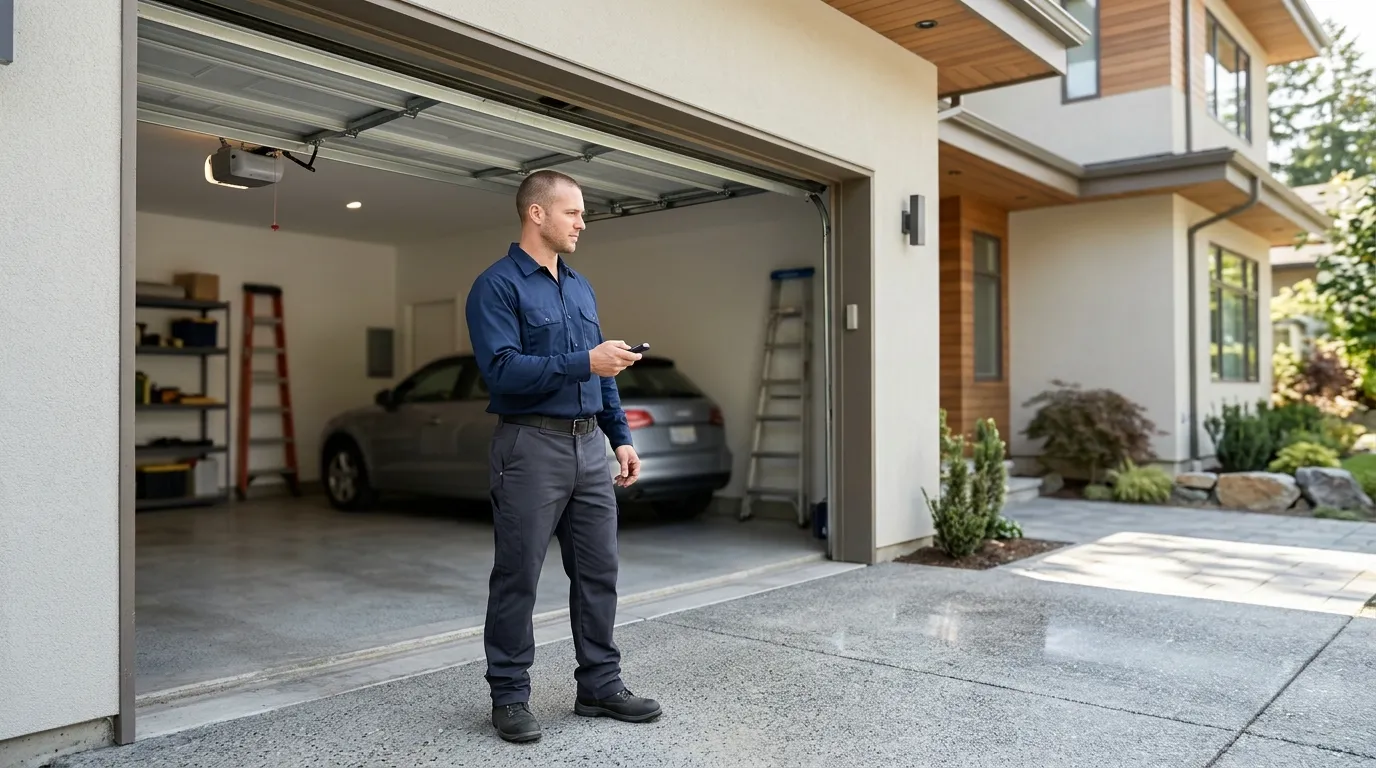
Forest Glen sits about 12 miles out from our Gaithersburg shop, past Wheaton and Kemp Mill on the way in. It's one of the farther stops on our board, so we build the trip into the day rather than treat it as a quick add-on - a broken spring call here gets scheduled the same way any other job does, just with more road time baked in. We don't keep a crew or a truck parked in the area, and we're not going to pretend otherwise. What we do is show up with the right springs and hardware already loaded, because the housing stock here tells us pretty reliably what we'll find before we knock on the door.
The median home in Forest Glen went up around 1959, which puts it a couple decades ahead of the 1980 median for our wider service area. That gap matters more than it sounds. A garage built in 1959 was framed for a single narrow door or a light double door, often with less headroom than anything built after 1980, and the opener - if it's not original - has usually been retrofitted into a jamb that wasn't built for modern rail lengths. We see older torsion setups mounted directly to the header instead of a separate bracket, and extension spring conversions where someone swapped out a worn system decades ago without updating the safety cables. None of that is unusual for a house this age. It just means the fix is rarely a straight parts swap.
With 2,510 households and a median income of $127,196, Forest Glen is a smaller, established pocket compared to some of the newer-build areas we cover. Smaller household count means we're not running a high volume of calls here, but it also means the housing has more in common, age-wise, than a newer subdivision would. Across the wider region the stock spans 1948 to 2015 with the 1980s and 90s dominating in most of the 56 named areas we serve - Forest Glen sits at the older edge of that range, closer to the original construction era than to the later suburban build-out. That's the reason we ask about the age of the door and the opener before we quote a repair, not after.
Given the age of the housing here, the calls tend to run toward hardware that's been patched more than once - torsion springs sized for an older door weight, rollers worn past the point of adjustment, and center supports rusted from the region's cold, damp winters under our COLD severe climate band. We'll straighten track and true up hinges where the door itself is sound. Where the door has been replaced but the original jamb and header haven't, we spend more time getting the new hardware to sit right than we would on a house built after 1980. One limit worth saying plainly: if the framing has shifted enough that the opening is out of square, that's carpentry work, not a garage door repair, and we'll tell you before we start rather than force a door into an opening that won't hold it.
No. We run out of Gaithersburg, about 12 miles away, and travel out for scheduled jobs. We don't keep a truck stationed here, so we plan the trip as part of the day's route rather than offering a separate local response time.
Forest Glen's median home dates to 1959, older than most of the area we cover. Older framing often means tighter headroom, original torsion hardware, or a retrofit opener that wasn't sized for the jamb. Knowing the build era helps us bring the right parts the first time.
Often yes, with modern torsion or extension spring systems built to the same opening dimensions. What we can't always do is match discontinued track profiles or original panel styles - in those cases we'll walk you through what a comparable replacement looks like.
Call now or request a free quote - same-day service on most repairs, upfront written pricing.