Gaithersburg, MD · Garage Door Service
Serving Derwood, MD from 3 miles away in Gaithersburg. We know the mid-1980s builder-grade doors common here and the cold-weather faults that come with them.
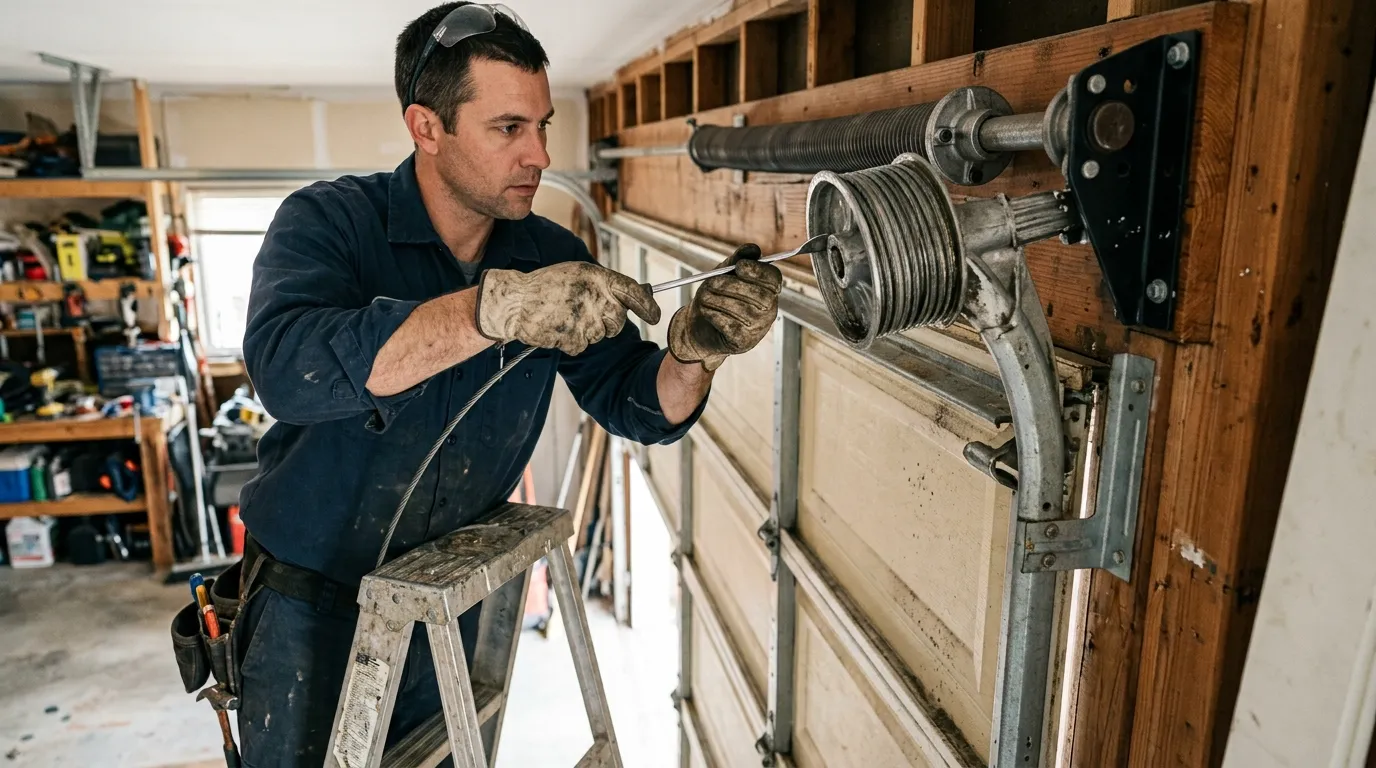
Derwood sits about 3 miles from our shop in Gaithersburg, close enough that a spring job or a stuck opener doesn't turn into a half-day trip. We don't have a depot in Derwood itself - we run out of Gaithersburg and cover this pocket along with the rest of the surrounding area. Short drive means we're not adding a trip charge to cover windshield time, and we can usually work a job into the same day's route as a nearby call in Redland or Montgomery Village.
What matters more than the mileage is what's waiting at the house when we get there. Derwood's housing stock runs a bit newer than a lot of what we see across the wider Gaithersburg service area, and that changes what we expect to find on the door before we even open the truck.
Across the broader Gaithersburg service area, the median house dates to 1980, with plenty of stock going back to 1948. Derwood's homes run newer on average - median year built around 1985 - which puts most doors here on later torsion hardware than the older sections of the coverage area. That's a real difference: mid-1980s installs are more likely to have factory torsion springs on a proper header bracket rather than the side-mount setups you find on older one-piece doors, and the tracks tend to be a slightly different gauge than what went in during the late 1940s and 50s.
What doesn't change with the build year is the winter. This area sits in a cold climate zone with real seasonal severity, and steel doors, hinges, and rollers all stiffen up the same way whether the house was built in 1948 or 1985. A torsion spring that's been cycling fine since summer can lose just enough tension in a cold stretch to leave a door heavy on one side or refusing to close square. We see that failure mode on newer builder-grade doors just as often as on the old ones - the hardware generation changes the parts, not the physics.
Derwood is a smaller pocket than most of what we cover - about 764 households, against 281,761 across the full service area. Median household income here runs around $93,000, below the $139,953 median for the broader area, which tends to track with a higher share of original builder-grade doors that haven't been swapped for insulated steel or upgraded openers yet.
A newer median build year doesn't mean uniform hardware. Mid-1980s subdivisions often shipped with a base-model door and a lighter-duty opener to hit a price point, and thirty-plus years later that's exactly the combination showing wear: chain-drive openers with worn gears, and steel doors with the original single-layer panels that dent and don't insulate. We're not going to tell you every door in Derwood needs replacing - plenty of that 1985-era hardware is still solid and just needs a spring, a cable, or a roller set. Replacement makes sense when the opener's logic board is failing or the panels are rusted through at the bottom, not on a door that just needs adjustment.
On the calls that come out of Derwood, torsion spring replacement on standard double doors is the most common job, mostly on the mid-1980s builder-grade hardware described above. Second most common is opener repair - worn gears in chain-drive units and the occasional dead circuit board, both typical failure points once a unit passes the 20-year mark.
We also get track and roller calls after a hard freeze, when a door that was already a little out of alignment finally binds. One thing we won't do is patch a door whose torsion tube or end bearing plate has already failed - at that point the labor to keep repairing the same door usually costs more over a year than replacing the unit outright, and we'll say so instead of running the meter.
No, we run out of Gaithersburg, about 3 miles away. We cover Derwood as part of our regular route, so the drive doesn't add meaningful time or cost to most jobs.
Generally yes. Derwood's housing runs newer on average, median year built around 1985, compared to a 1980 median across the wider service area with plenty of stock back to 1948. That means more factory torsion hardware and fewer of the old side-mount setups.
This area sits in a cold climate zone with real seasonal severity. Steel expands and contracts, springs lose a bit of tension in the cold, and grease in rollers and hinges stiffens up. It hits doors from any build era, just in slightly different ways depending on the hardware.
Depends what's failed. A bad spring, cable, or roller set is a repair, not a reason to replace. If the torsion tube or end bearing plate has gone, or the opener's control board is dying, repair costs stack up fast and replacement is usually the better math.
Call now or request a free quote - same-day service on most repairs, upfront written pricing.