Gaithersburg, MD · Garage Door Service
Gaithersburg's double-wide garage doors sit on decades-old track hardware built for 1980s-90s homes. Here's how wind loads that hardware and where it fails first.
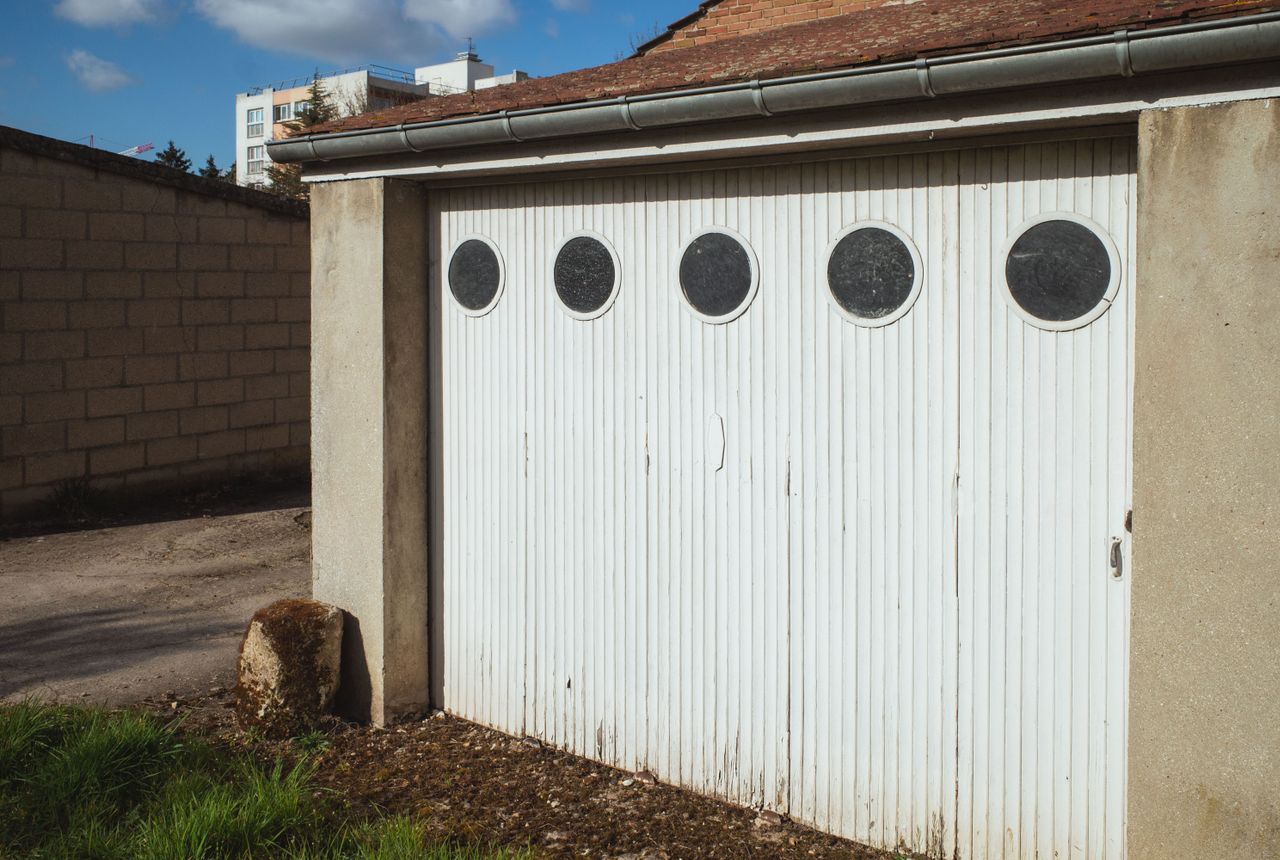
Most driveways in Gaithersburg's mapped subdivisions were poured for a double-wide door sometime between 1948 and 2015, with the heaviest concentration of that building going up through the 1980s and 90s. If your house falls in that range, start with the horizontal struts on the back of the top two panels - the metal bars that run the width of the door. Press flat against the middle of the top panel with the door closed. Any bow or give in the center, more than at the edges, tells you the strut either isn't there or has come loose from its rivets. Next check the track brackets where they bolt to the framing, not the door itself. On a wide door those brackets carry more leverage than on a single, and thirty-plus-year-old lag bolts back out of old jamb wood more than people expect. Spin each one by hand. If it moves without a wrench, that's your weak point before wind ever gets involved. This is a five-minute check, and it's the one most owners skip because nothing looks obviously wrong until the day it is.
Gaithersburg sits in a climate band rated cold and severe, which matters more for a wide door than a single because there's more steel and more seal to react to temperature swings. Cold makes track steel less forgiving - it doesn't flex and recover the way it does in summer, it flexes and stays bent. The same weather fronts that drop temperatures fast through this area are usually the ones pushing wind across whatever is standing in their way, and a closed double door is a broad flat surface with nowhere for that push to go except into the panels and the track. On an older door from the 1980s-90s stock common here, the rubber bottom seal has usually shrunk enough by winter that it's not sealing the slab anyway, so wind gets a grip under the bottom edge as well as against the face. None of that is dramatic on its own. It's cumulative - a track bracket that loosens a sixteenth of an inch this winter is looser again next winter, until a gust that would have done nothing five years ago is enough to rack the door in its frame.
The most common mistake is upgrading the door - going to a heavier insulated panel for energy reasons - without checking whether the track hardware underneath was ever rated for it. A heavier double panel puts more load on the same 30-to-40-year-old brackets, which is backwards: you've added weight and wind surface to hardware that was already older than it should be. The second mistake is treating the two garage door openers as if they hold the door shut against wind. They don't. An opener resists the motor moving; it isn't a structural brace, and depending on it that way leaves the actual failure point - the track and the struts - unexamined. The third is assuming a door that's never had a problem never will. A wide door in an exposed spot, on a corner lot or at the end of a row with fewer windbreaks, takes a different load than the same door tucked behind neighboring houses, even a few streets over. We don't have wind-speed data specific to this area, so we won't quote you a number - but we can tell you what the hardware under an old double door is built to take, and it usually isn't much.
Across the roughly 104,291 owner-occupied houses in this service area, the double garage door is typically the single largest moving panel on the house - bigger than any window, most doors, sometimes bigger than the largest wall section. That's a lot of surface for wind to load against, and on a house built to the codes in force in the 1980s and 90s, the structural attention paid to that opening was often minimal by today's standard, because the doors of that era were lighter and the brackets matched them. A door that's fine sitting sheltered a mile off in a spot like Washington Grove can still rack badly on a more exposed lot a few miles out toward Montgomery Village, even though both houses look similar on paper. The failure itself is usually the same: the top section bows first, the roller nearest the strong side of the wind pulls partway out of the track, and the door binds or comes off entirely on the next gust. It's rarely one bad storm - it's one bad storm finding hardware that was already most of the way to giving out.
Yes, simply because there's more flat surface for the wind to push against and more distance across the top panel for it to flex before the struts stop it. On homes here from the 1980s-90s stock, that strut is often thin or missing, which is the actual weak point, not the width itself.
You can buy the kit, but fitting it right means matching it to your exact panel gauge and getting it square to the track brackets, which are often the loosest part of an old setup. A misaligned strut can bind the door instead of stiffening it, so we'd rather size that on site.
If your house falls in the 1980s-90s range common across this area and the brackets look painted-over or have surface rust at the bolt heads, they're almost certainly original. New brackets are usually galvanized and bright for the first several years.
Sometimes, but only if the track and brackets get upgraded with it. We've seen owners spend on a heavier door and put more load on the same tired hardware, which makes the wind problem worse, not better.
Call now or request a free quote - same-day service on most repairs, upfront written pricing.