Gaithersburg, MD · Garage Door Service
Gaithersburg homeowners with 1980s-90s doors: find out when a repair still makes sense and when the cold-climate hardware finally calls it quits here.
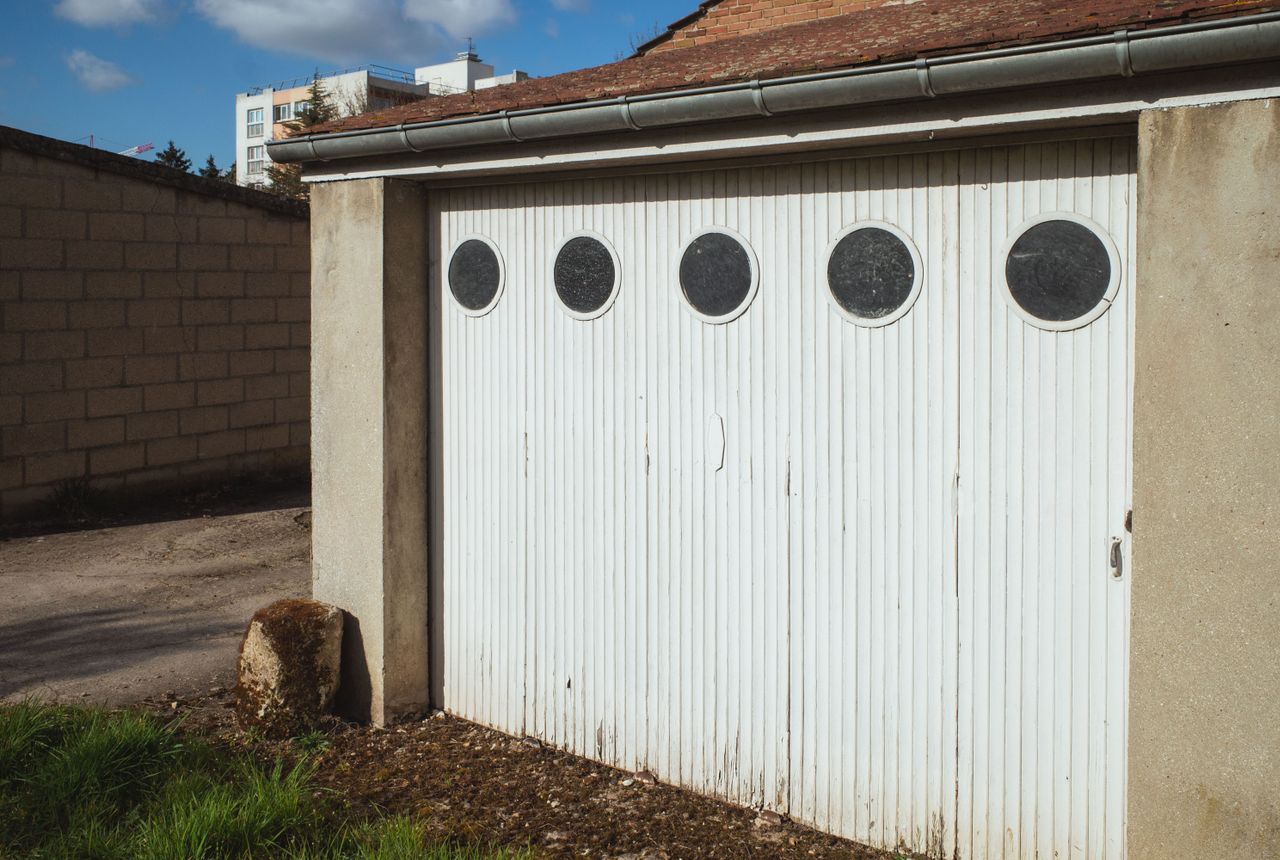
Start with the year your house went up. Across this side of Gaithersburg the housing stock runs from 1948 to 2015, but the median build year lands around 1980, and most of the 56 named areas in the service territory filled in through the 1980s and 90s. That matters because a door installed with the house is now 30 to 45 years old, and hardware from that era isn't always what's on the shelf today.
Open the door by hand with the opener disconnected. It should move smoothly and hold position halfway up - if it drops or shoots up, the torsion spring has lost tension and needs replacing, not lubricating. Look at the track for rust pitting at the bottom three feet, where road salt and melt runoff sit longest. Check the bottom panel for water staining or soft spots; steel doors from the 80s often used a thinner gauge than what's sold now. Roll the rollers between two fingers - if they've got flat spots or grinding play, that's wear, not damage, and it's a cheap fix if you catch it before it takes out a track bracket with it.
Gaithersburg falls in a climate band classified cold and severe, which means the door hardware doesn't just sit still through the year - it expands, contracts, and freezes solid more often than owners expect. A torsion spring wound tight in July behaves differently than the same spring in a January cold snap, and steel track that's slightly out of plumb will bind harder when it's cold than when it's warm.
This is the piece people miss on an older door. A spring or hinge that was fine for twenty summers can seize or snap the first hard freeze after the lubricant inside it finally dries out. Galvanized track holds up better than bare steel, but on houses from the 1980s and 90s stock that make up most of this area, a lot of what's installed is the older bare-steel style. Once surface rust starts at a weld point, freeze-thaw cycling works it faster than dry heat ever would. If your door is groaning or catching only on the coldest mornings, that's not the opener - that's cold steel telling you where the wear already is.
The median household income across this service area sits at $139,953, and with 104,291 owner-occupied houses out of 281,761 households, most of the doors we're called about belong to someone who could write a check for full replacement without much thought. That's exactly where the mistake happens - people replace a whole door and opener assembly to fix a $40 roller problem, or they go the other way and keep patching a door whose track is bent beyond safe realignment because replacement sounds expensive.
Neither instinct is wrong on its own. The problem is skipping the diagnosis step. A bent track can sometimes be pulled back into alignment if it's caught early; once it's kinked at a bracket, no amount of adjustment holds. A spring that's the wrong wind or wrong wire gauge for the door's weight will wear the opener gears prematurely, and that gets blamed on the opener instead of the mismatched spring. Before deciding to replace, get the actual failed part identified. Half the
Here's the honest version. A door on a house built in that 1980s-90s window this area is full of is usually still worth fixing if the failure is a spring, a cable, a roller set, or a section of track - those are standard parts regardless of the door's age. What's not worth fixing is a door where the panels themselves have rusted through at the bottom, or where the track has been bent and rebent enough times that the frame it's mounted to has pulled loose from the jamb. At that point you're paying labor twice.
We don't stock every hinge and end bearing that was common on doors built in 1980, and lead time on some of that older hardware can run longer than a same-week job would suggest. If a part is genuinely obsolete, we'll tell you that instead of jury-rigging a fix that won't hold through the next cold spell. Given how much of this area's housing sits in that same build window, it's a call we make often enough to be straightforward about: sometimes the door is fine and the fix is small, and sometimes the smart move is a new door instead of a fourth repair on the old one.
In most cases, yes. Springs, cables, rollers, and hinges are still standard-size parts even on an older door. The exception is a door with rusted-through panels or a track pulled loose from the framing - at that point you're replacing, not repairing, and it's usually cheaper to just do the door.
Cold steel doesn't move the same as warm steel. In this area's cold, severe climate, a torsion spring or a slightly misaligned track that's fine in summer can bind hard once temperatures drop. If it only acts up on the coldest mornings, that points to hardware wear, not the opener.
Depends what's broken. A spring, cable, or roller failure on an otherwise sound door is a straightforward repair. If the panels are rusted through or the track is bent past realignment, replacement usually costs less over time than repeated patch repairs.
For standard springs, cables, and rollers, yes. Some specific hinge or bearing styles from older builds can take longer to source, and we'll tell you up front if that's the case rather than force a fix that won't last.
Call now or request a free quote - same-day service on most repairs, upfront written pricing.