Gaithersburg, MD · Garage Door Service
In Gaithersburg, most homes date to the 1980s stock era with original torsion hardware; here's what a technician checks first before quoting a repair.
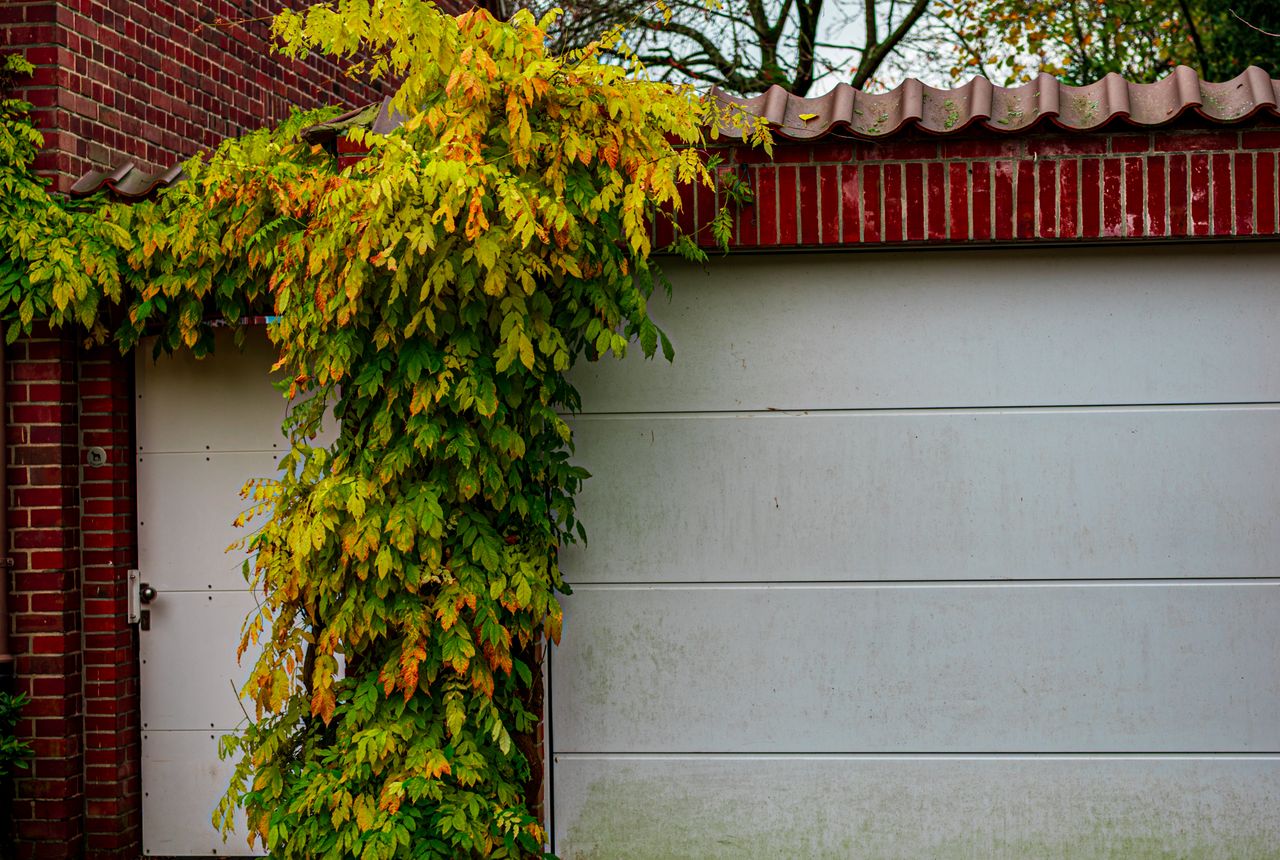
Before you call anyone, pull the release cord with the door closed and see if it lifts by hand without much fight. If it's heavy or drops fast, the torsion spring is losing tension, not the opener. Housing across this service area went up mostly between 1948 and 2015, with the bulk of it - across all 56 named neighborhoods we cover - dating to the 1980s and 90s. That matters because a door from that era is likely on its second or third spring set already, and the drums, bearing plates, and end brackets are original unless someone's replaced them.
Look at the bottom panel for water staining and at the track for rust bloom where it bolts to the jamb. On a house from the 1980s stock era, the steel jamb brackets are the weak point long before the panels give out. Check the sensor eyes at the bottom of the tracks too - if your door predates photo-eye code requirements, a previous owner may have added them later, or not at all, and that's worth knowing before you troubleshoot an opener that won't close.
Write down what you see. It saves a diagnostic trip and tells a technician whether you're looking at a spring job or something structural in the frame.
Gaithersburg sits in a climate band the federal data marks cold and severe, and that shows up in torsion springs before almost anything else. Steel coils tighten and loosen with temperature swings, and a spring that's been cycling hard through repeated freeze-thaw winters fatigues faster than the same part would in a milder climate. That's not a defect in the door - it's the metal doing exactly what cold steel does over three or four decades.
Cold also thickens grease in the rollers and bearing plates, so a door that ran quiet in October starts grinding by January. If your rollers are the nylon type common in 1980s and 90s builds, cold makes them brittle at the edges, and you'll hear a slap or thud on the down cycle before you ever see a crack.
Humidity swings through the year also work on wood-composite panels and on any steel panel with a chipped paint edge - rust starts at the chip and spreads under the coating where you can't see it until the panel bows. None of this is dramatic on its own. It's cumulative, and it's why a door that looked fine in September needs a spring check by February.
The most common mistake we see locally is someone adjusting a torsion spring's winding cone themselves on a door that's original to a 1980s or 90s build. The hardware on those doors wasn't engineered for tool access the way current double-torsion systems are, and the winding bars people use on newer doors don't seat right on the older cone profile. That's how fingers get hurt.
The second mistake is assuming an opener replacement fixes a door that's actually dragging on a bent track. Across the owner-occupied housing stock in this area, a lot of doors have tracks that were nudged out of alignment years ago by a car bumper or a shifted jamb, and no opener - old or new - will run smooth against a track that's fighting it. Swapping the opener just hides the real problem for a few months.
The third: waiting until a cable snaps to call. A fraying cable on a door from the 1980s stock era is a five-minute fix during a routine visit and a much bigger one once it's whipped through a panel.
Most of what we're called out for in Gaithersburg and the neighborhoods around it - Washington Grove, Montgomery Village, Redland, Derwood, and the rest within a few miles - traces back to age catching up with original hardware. A door installed when a house was built in 1980 or 1985 is now on borrowed time for springs, cables, and rollers even if the panels themselves still look decent.
With a median household income of $139,953 across this service area, most owners here are in a position to choose a full opener or hardware upgrade instead of patching a unit from the 1990s piece by piece, and for a lot of these older systems that's the more honest recommendation than another repair. That said, we won't tell you to replace a door that just needs a spring and a set of rollers - replacement makes sense when the track is bent beyond adjustment or the panel itself is rusted through, not just because a door is old.
One limitation worth being upfront about: if a part is obsolete enough that the manufacturer no longer makes it, lead time on a match can run longer than the repair itself, and that's outside our control.
If your house was built in the 1980s or 90s, which covers most of this area, the original torsion spring has usually already been replaced once or is due. A heavy door that won't stay up on its own, regardless of age, points to the spring first.
Yes. This area sits in a cold-severe climate band, and steel torsion springs lose elasticity faster with repeated freeze-thaw cycling than they would in a milder climate. It's gradual, which is why most people don't notice until the door feels heavy.
Not on an original 1980s or 90s torsion setup. The winding cone hardware on older doors doesn't match the tool clearance of newer systems, and misjudging it is how people get hurt. Call it in.
Not on its own. A dragging door is more often a bent track or worn roller than a weak opener. Swapping the opener without fixing the track just hides the problem for a while.
Call now or request a free quote - same-day service on most repairs, upfront written pricing.