Gaithersburg, MD · Garage Door Service
Opener repair for Gaithersburg homes built between 1948 and 2015, where cold winters and aging drive gears cause most of the calls we run.
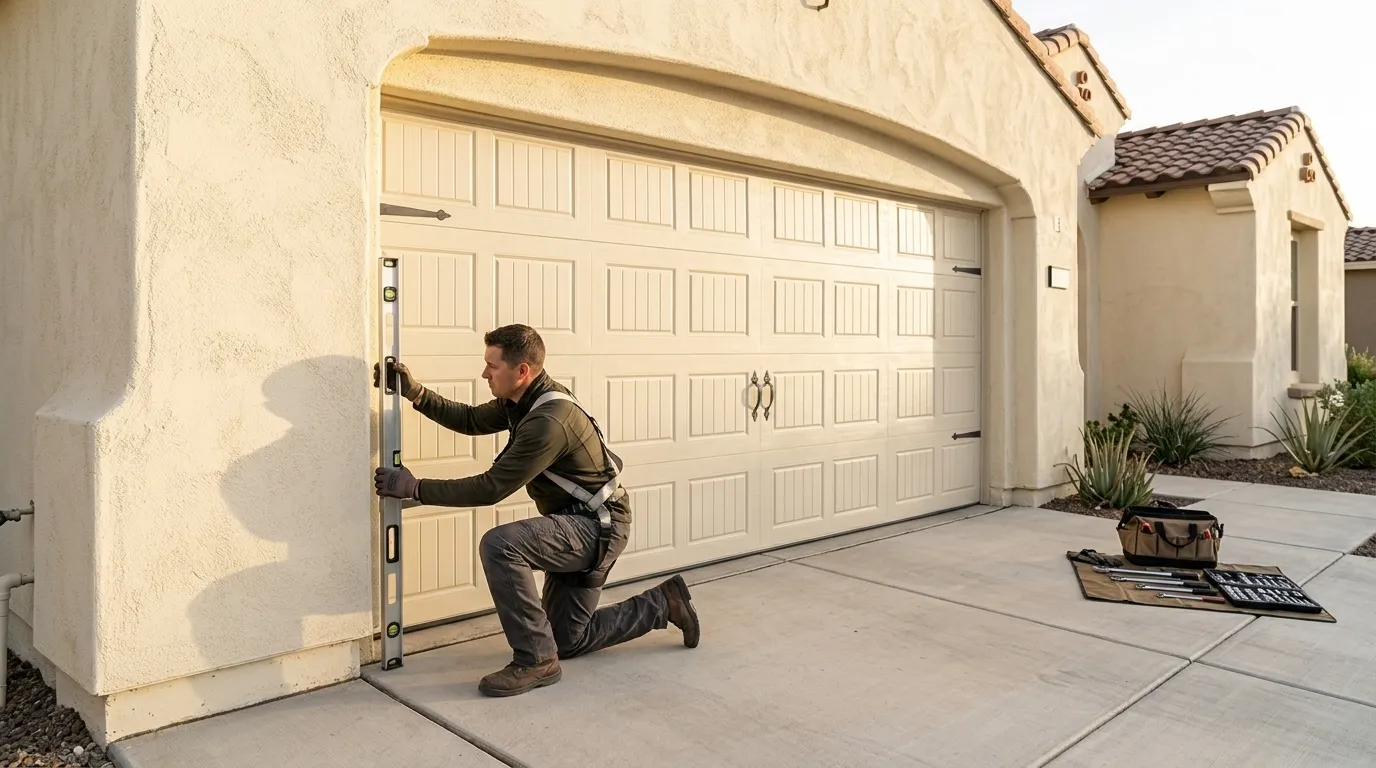
We're not going to hand you a number here, because opener repair covers too much ground to price sight unseen. A stripped plastic drive gear is a different job than a fried logic board, and a capacitor swap is different again from replacing a whole unit that's outlived its motor. What we can tell you is what drives the cost conversation in this area specifically: the housing stock here runs from 1948 up through 2015, with the bulk of it going up through the 1980s and 90s, so a large share of the openers we're called out to are original or close to it. That means parts availability matters as much as labor. Some older chain-drive units still have obtainable gear kits. Others don't, and at that point replacement is cheaper than chasing discontinued parts across three suppliers. The honest limitation: if your opener predates the mid-90s and the manufacturer's stopped stocking gear kits, we're not going to quote you a repair we can't actually complete. We'll tell you that on the phone, before a truck rolls, not after we're standing in your driveway.
The failure that gets misdiagnosed most is a door that won't respond to the remote but works fine on the wall button. Owners assume the opener's dead. Half the time it's a worn drive gear slipping under load, not a dead motor - the motor still hums, the carriage just doesn't move, or moves and then reverses for no visible reason. The other place this goes sideways is capacitor failure on units running through their second or third winter after the warranty window closed. The opener starts, stalls, and trips the breaker on the second try. Owners replace the whole unit because that's what a big-box store tells them to do, when a fifteen-dollar capacitor would have fixed it. We see it happen because most people don't take the cover off an opener until it's already stopped working, so by the time we're called, the gear has already stripped past the point of a clean fix, or the board's already shorted from repeated stalls. Catching either fault early - a grinding noise, a door that hesitates before it moves - saves the whole unit instead of just the part.
Two things about this area push opener failure earlier than you'd expect. First, the housing stock: median build year lands around 1980, with most of the 56 named communities in this stretch of Montgomery County built out through the 1980s and 90s. That means a huge share of openers in these garages are original chain-drive units nearing or past their expected service life, running on 30-plus-year-old gearing that was never designed for this many open-close cycles. Second, the climate band here is classified cold and severe. Grease inside an opener's gearbox stiffens hard in winter, and a stiff gearbox forces the motor to work harder on every cold-morning start. That's the exact stress that snaps a plastic drive gear or overloads a capacitor that's already near the end of its life. Put those two together - original-era hardware plus repeated cold-start strain - and you get a failure pattern that shows up every winter across this service area, not a one-off. It's not a Gaithersburg-specific defect. It's what 40-year-old gearing does when a cold snap hits it twice a day.
The call usually starts the same way: the door doesn't move when the remote's pressed, but the light on the opener still comes on. That single detail rules out a dead outlet and points straight at the motor, the gear, or the logic board - and which one it is depends on whether you hear a hum, a grind, or nothing at all. A hum with no movement usually means a stripped gear. A grind that gets louder over days means the same gear is close to failing outright. Total silence, no hum, no light - that's more likely the board or a tripped breaker upstream. None of this is a full diagnosis over the phone; we're describing the pattern so you know what to listen for before you call, not so you can skip the call. If your opener is showing any of these signs during a cold stretch, don't keep forcing it with the remote. Repeated attempts on a jammed gear turn a $40 part into a full unit replacement fast.
Cold stiffens the grease inside the gearbox, which makes the motor work harder to turn the drive gear. If that gear is already original-era plastic, the extra strain on a cold start is often what finally strips it. It's not a coincidence tied to one bad night - it's cumulative wear meeting a cold snap.
Sometimes. If the motor and board are sound and it's just a gear or capacitor, repair is usually cheaper. If the unit is original to a house built in that era, parts availability becomes the deciding factor - some gear kits are still stocked, some aren't, and we'll tell you which before quoting a repair.
That points to the remote's receiver or the opener's logic board rather than the motor itself, since the motor clearly runs fine on manual command. It's a narrower fix than a full motor or gear replacement, but it still needs a look to confirm which component's failing.
Yes, we run calls across this side of Montgomery County, including areas like Montgomery Village, Derwood, North Potomac, and the other communities near Gaithersburg. Coverage and scheduling can vary by exact location, so it's worth a quick call to confirm.
By Neighborhood
We also handle opener repair in these Gaithersburg-area suburbs.
Call now or request a free quote - same-day service on most repairs, upfront written pricing.