Gaithersburg, MD · Garage Door Service
Cable repair for Gaithersburg homes built 1948-2015, where cold winters and original hardware wear cables fast. Same service area, no guesswork pricing without inspection.
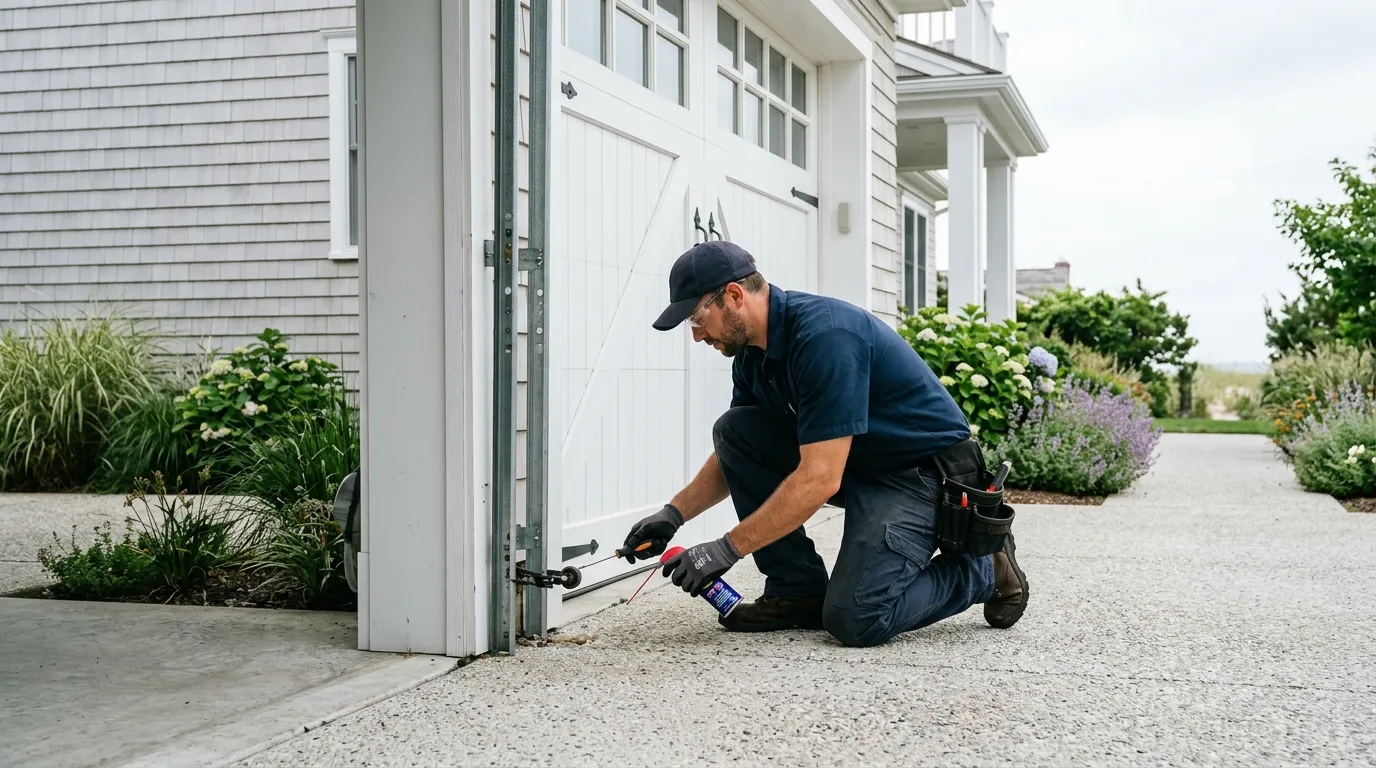
We don't quote a cable job over the phone without seeing the door, and we're not going to pretend otherwise here. A snapped lift cable on a single door is a different job than a frayed cable on a double door with a worn drum, and the parts on hand matter too. What we can tell you is what drives the cost: whether one cable failed or both, whether the drum or the track got damaged when the cable let go, and whether the spring system needs adjustment once the cable is back on. Homes in this service area built anywhere from 1948 through the 2015 range carry a wide mix of drum and cable sizes, and the 1980s-90s stock that makes up most of the housing here often has cables that were never upsized when openers got heavier over the years. That mismatch is common enough that we check drum size and cable gauge before we quote anything. If your door came down hard or the cable is wrapped around the shaft, don't try to free it yourself - that's a spring-tension problem, not just a cable problem, and it's the one part of this job we won't walk a homeowner through over the phone.
The failure that turns a cable repair into a bigger bill almost always starts the same way: a cable that's already fraying gets ignored because the door still opens. It keeps opening right up until the day it doesn't, and by then the cable has usually come off the drum unevenly, bent the track, or let the door drop crooked on one side. On the double doors common across the 1980s-90s stock in this area, an uneven drop like that can rack the door hard enough to bend a stile, which is a panel repair on top of the cable job. The other place this goes sideways is when someone tightens or replaces a cable without checking the spring first. Cables and torsion springs work as a system - a cable that's under the wrong tension wears out again in months, not years. We see that kind of repeat failure most often on doors where a cable was swapped once already by someone in a hurry. If a cable is showing rust or separated strands, that's the window to call before the door comes down on its own schedule instead of yours.
Cable wear here isn't random - it tracks with two things this service area has plenty of: age and cold. Housing across the 56 named communities we cover runs from 1948 construction up through 2015, with the bulk of it dating to the 1980s and 90s, and a galvanized lift cable on a door that old has usually seen thirty-plus winters of expansion and contraction. This region sits in a severe cold climate band, and repeated freeze-thaw cycles work on steel cable the same way they work on any exposed metal fastener - microscopic strand separation that you can't see until a cable finally lets go, often on the coldest morning of the year when the steel is least forgiving. Add in original hardware that was never upgraded when a heavier insulated opener got installed later, and you've got cables running loads they weren't sized for on top of decades of cold-weather fatigue. That combination - old cable, cold steel, mismatched load - is why cable failure shows up so often as a January or February call rather than a summer one.
The most reliable warning sign is a door that looks slightly off-level when it's halfway up or down - one side an inch or two lower than the other. That's a cable starting to slip on the drum, not a track problem, even though it looks like the door is running crooked in the tracks. Another tell: a popping or snapping sound right as the door starts to move, which is usually strands separating under load before the cable fully lets go. If you see frayed wire poking out near the bottom bracket, that cable is on borrowed time no matter how the door is currently operating. A door that drops suddenly the last foot instead of settling is often a cable that's already partially failed and is about to finish the job on its own. None of these symptoms fix themselves, and none of them get safer to ignore. If your opener is straining harder than usual to lift the door, or reversing partway up, that load is very likely going through a compromised cable instead of a spring doing its job.
We don't recommend it. A lift cable works against a loaded torsion or extension spring, and releasing tension the wrong way has hurt people. If the cable has already snapped and the door is stuck, leave it as is and call - don't try to force the door up or down.
A broken spring usually means the door won't lift at all, or feels far heavier than normal even with the opener running. A cable problem more often shows as a door that's uneven, that pops when moving, or that drops suddenly near the bottom. Either way, both parts of the system get checked together.
Cold steel is less flexible, and a cable that's already got frayed strands from years of use is more likely to finish separating when temperatures drop hard. Given this area's severe cold climate band, that's the season we see the most cable calls.
By Neighborhood
We also handle cable repair in these Gaithersburg-area suburbs.
Call now or request a free quote - same-day service on most repairs, upfront written pricing.