Gaithersburg, MD · Garage Door Service
North Potomac homes date mostly to 1988, a generation newer than the wider Gaithersburg service area. We drive out the 4 miles to fix openers built on that era's hardware.
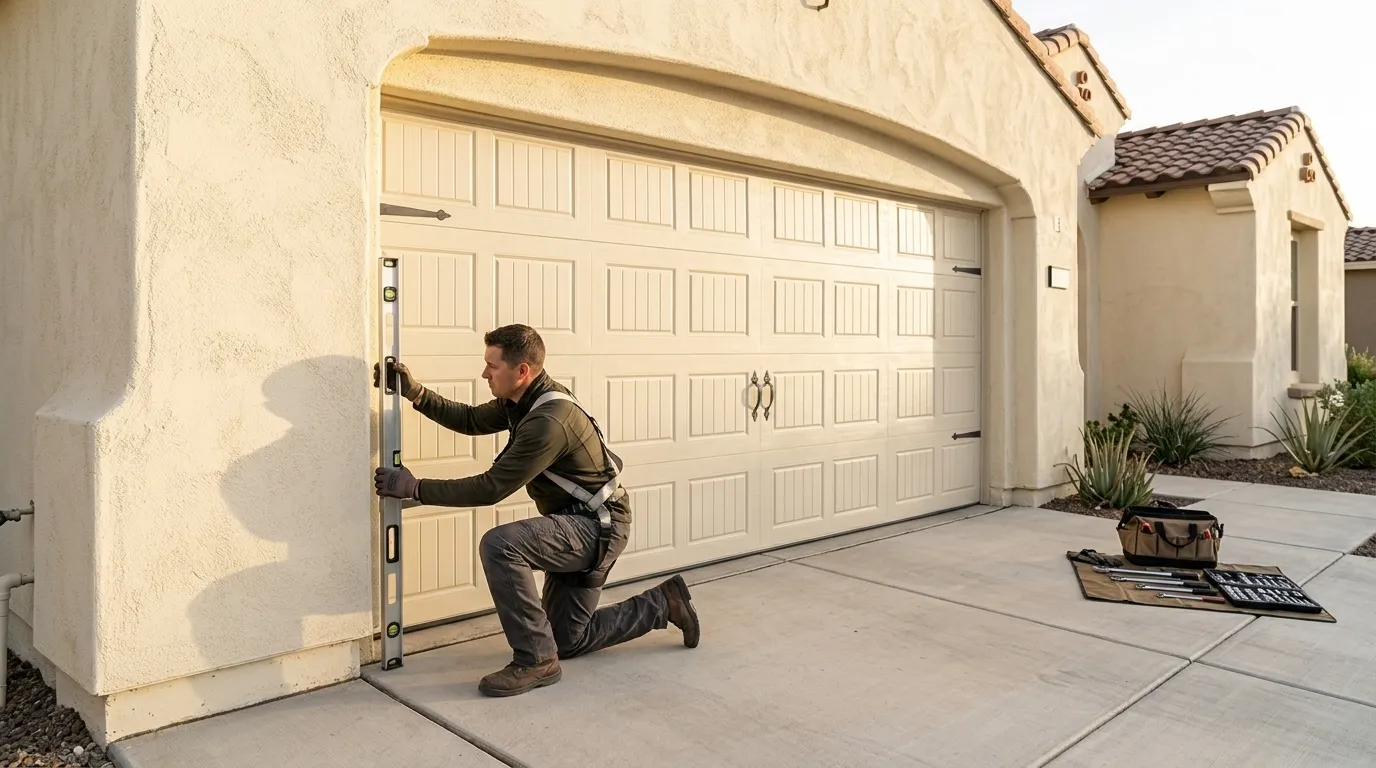
Most houses in North Potomac went up around 1988, a good three decades newer than the oldest stock in the wider Gaithersburg service area, which stretches back to 1948. That gap matters more than it sounds. A house from 1988 has almost certainly had its opener motor swapped once, maybe twice by now - the units from that decade weren't built to run thirty-plus years. What usually hasn't been touched is the header bracket bolted into the framing and the track mount screwed to the same studs. When a homeowner calls about a door that reverses halfway up, or a remote that only works if you stand under it, the motor's often the newer part and the mounting hardware behind it is the original 1988 install, working loose after decades of vibration. We check both, not just the one that beeps at you. If the bracket's pulled away from the header, no new logic board fixes that - it's a structural fix first, electrical second.
We don't quote a number here without seeing the opener - chain versus belt drive, the age of the logic board, whether the wall control still matches the head unit all change the job. What we can tell you is what tends to drive the bill up in this specific area: North Potomac's median household income runs $186,438, well above the $139,953 average across the rest of the service area, and we see more requests here for belt-drive units and smartphone-linked openers instead of a straight swap to the cheapest chain-drive box. That's a choice, not a requirement - a chain drive still opens the door - but it costs more up front for less noise and an app that tells you the door's shut. We'll always give you the plain option and the quiet option and let you pick, rather than assuming which one fits the house.
Cold winters in this region put real strain on garage door openers, and North Potomac's smaller footprint - about 8,198 households - doesn't change the physics. An unheated garage in a severe cold climate stiffens chain lubricant, makes belt tension behave differently, and puts extra load on a motor that's already working against a heavier door in January than it does in July. Openers here fail more often in the cold months because the circuit board and the motor capacitor are the two weakest links in a system built mostly in the late 1980s and replaced piecemeal since. If your opener strains, stalls, or trips its breaker only when it's cold out, that's not a coincidence - it's the original mounting geometry from 1988 combined with a drivetrain that's aged past its rated cycles, doing exactly what worn hardware does when the temperature drops.
We run this call from Gaithersburg, about 4 miles out - there's no branch office sitting in North Potomac, just a truck that comes when you call. That distance is short enough that it doesn't change scheduling much, but it does mean we're not driving past your house daily; we come out for the job, not on a loop. Have your opener's brand and rough install year ready if you know it - most homes here are 1988-ish builds, and knowing whether you're on an original bracket or a replacement motor helps us bring the right parts on the first trip instead of a second visit. You can also check our North Potomac service area page for what else we cover out this way.
On a straightforward job - dead capacitor, worn drive gear, a sensor knocked out of alignment - we're usually done within the visit, parts on the truck. Where it takes longer is when the header bracket itself has pulled loose from thirty-plus-year-old framing, which we see more in this area given the housing age; that means re-anchoring into solid wood before the new motor goes up, and it adds time. One honest limit: if the logic board is a discontinued model from an opener brand that stopped making parts for it, we won't pretend to source something that doesn't exist - at that point replacing the head unit costs less than chasing a board nobody stocks anymore, and we'll tell you that instead of running up a bill hunting for it.
Probably not the motor - most homes here date to around 1988, and opener motors from that era rarely last more than 15-20 years of regular use. What's often still original is the mounting bracket and track hardware bolted into the framing at build time, which is usually the first thing worth checking before assuming the motor's circuit board is the problem.
No. We work out of Gaithersburg and drive the roughly 4 miles out for every call here. There's no local depot, just a scheduled truck visit, so response depends on the day's route rather than a nearby office.
This area sits in a climate zone with real cold stretches, and an unheated garage lets chain lubricant stiffen and puts more load on the motor's capacitor. Openers already worn from age tend to show it first in January, not July - that's the drivetrain telling you it's near the end, not a one-off glitch.
Depends what's failed. A dead capacitor or worn gear is a repair. A discontinued logic board on a motor with no parts supply isn't worth chasing - replacing the head unit is usually cheaper than the labor spent hunting parts that don't exist anymore. We'll tell you which situation you're in before we start.
Call now or request a free quote - same-day service on most repairs, upfront written pricing.