Gaithersburg, MD · Garage Door Service
Serving Wheaton's 1959-era housing stock from Gaithersburg, 10 miles out. Original hardware, cold-climate springs, and what a service call here actually costs.
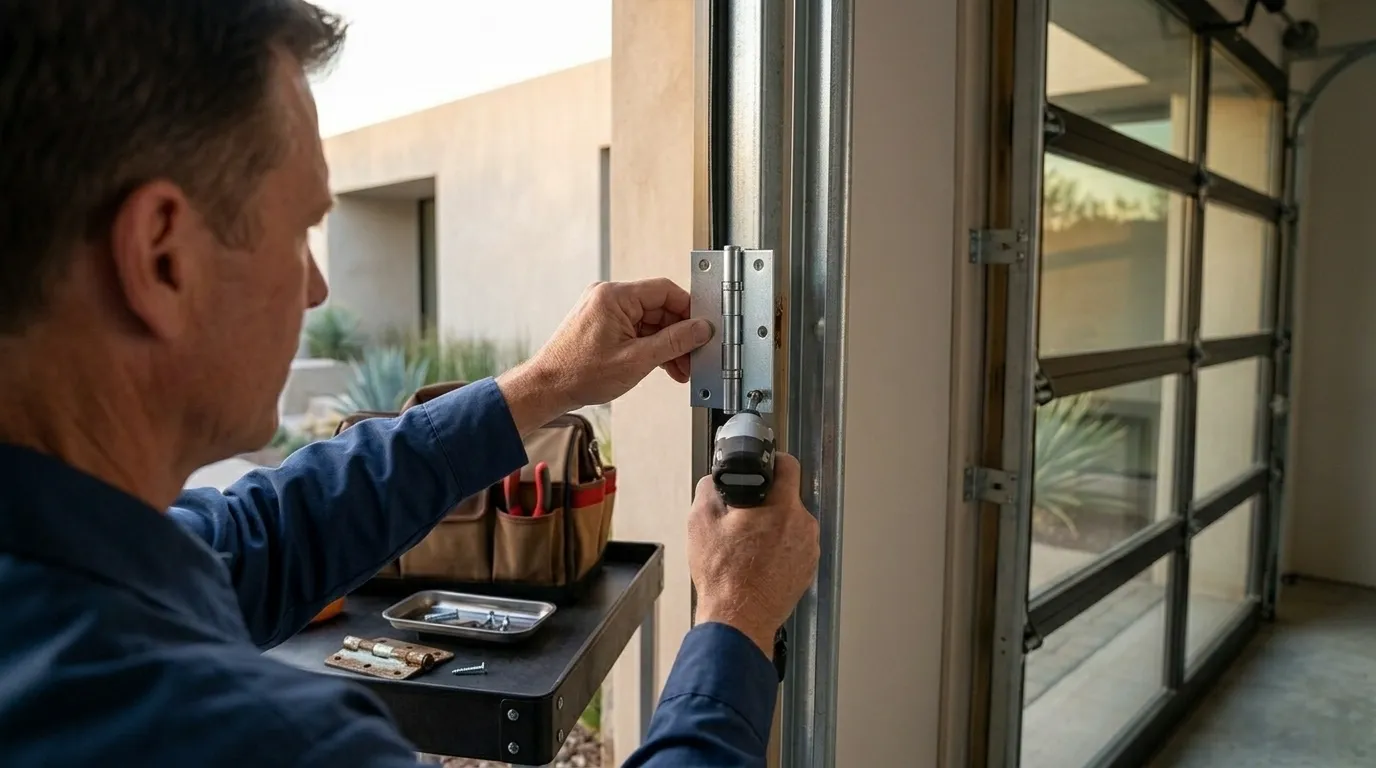
Wheaton sits 10 miles from our shop in Gaithersburg, and that drive shapes how we schedule the job, not whether we take it. A tech loading a truck for a Wheaton call packs differently than for a job three miles away - springs, cables, and roller sets get pulled in advance because there's no quick trip back for a forgotten part.
The bigger issue is the houses themselves. Wheaton's median year built is 1959, noticeably older than the 1980 median across the wider service area we cover. That means more original torsion springs still hanging on their factory shafts, more single-piece doors on hardware nobody has manufactured in decades, and more openers that were never designed for the load of a heavier insulated replacement door. When a spring finally gives out on a house built in the late 1950s, it's rarely a like-for-like part swap - the drum, the shaft diameter, or the track spacing often doesn't match anything on the truck's standard shelf.
We're not guessing at Wheaton's age profile - it's older housing stock than most of what we service, and that changes the first question we ask on the phone: what year is the house.
A straightforward spring or roller repair on a Wheaton call runs about the same on-site time as anywhere else we go - the work itself doesn't stretch out because of the address. What changes is the front end: because we're driving in from Gaithersburg, 10 miles away, we build the visit around a window rather than an exact clock time, and we ask more questions up front about the door's age and hardware so the truck rolls with the right parts the first time.
When a job turns out to need a part that matches 1950s-era spacing or an obsolete drum size, that's the one thing that adds real time - not to the repair itself, but to sourcing. We'll tell you on the call if that's likely given the house's age, rather than finding out after the truck is already there.
The honest limit here: if your door needs a part we don't carry stock of because it hasn't been made in fifty years, we're not going to pretend we can swap it same-day. We'll tell you what we're ordering and when it's expected, instead of guessing.
Calling in from Wheaton, the most useful thing you can tell us is the age of the house and whether the door and opener look original or replaced. Given how many houses here date to the late 1950s, that single detail - original hardware versus a later swap - often tells us more than a description of the noise or symptom.
We schedule the Gaithersburg truck around the day's route, so a Wheaton call gets grouped with other jobs in that direction when we can manage it. That's a scheduling reality of covering a wide area from one base, not a promise about timing, and we won't quote a response window we can't back.
If you're not sure what you're looking at - spring, cable, track, or opener - a phone description is enough for us to bring the right stock. See our Wheaton service area page for what we cover, or check the Gaithersburg garage door service page for the full range of repairs we run.
We don't have a Wheaton-specific price list, and we're not going to invent one. What we can tell you is that older hardware tends to cost more than a standard repair, not because the labor is harder, but because a part matching 1950s-spacing or a drum size out of production sometimes has to be sourced rather than pulled off the truck shelf.
Wheaton's median household income runs $107,349, a bit below the wider area's $139,953 - worth mentioning only because it's a real number for this suburb, not a sales pitch. We price the job the same way regardless: what the door needs, not where it sits.
If a repair on an original 1959-era door is going to cost close to what a full replacement runs, we'll say so on-site. Sinking money into a door that's fighting its own age isn't a favor to you, and we'd rather tell you that up front than let a repair bill creep past what a new door costs installed.
On houses this age, the symptom we hear most is a door that's suddenly heavy - it worked fine, and now the opener strains, chatters, or reverses partway up. That's almost always a broken or badly wound torsion spring giving out after decades of cycles, and on a 1959-built house, that spring may be the original.
A second common call: a door that shudders or drags on one side. On original one-piece doors, that's often a roller or track alignment issue that's gone unaddressed since installation, because nobody's touched the hardware since.
Cold weather makes both worse. Given this area's severe cold climate, steel contracts, lubricant thickens, and a spring that was marginal in October fails outright in January. If your door's gotten noticeably harder to lift as it's gotten colder, that's the spring talking, not the opener.
The place this goes wrong is when someone tries to force a modern replacement spring onto original 1950s-era hardware without checking the shaft diameter or drum style first. It looks like a fit, it isn't quite, and the door ends up worse than before - off-balance, harder on the opener, sometimes dangerous under tension.
The other way it goes sideways: treating a heavy, aging door as a repair problem for years running, spring after spring, when the door itself - panels, track, and all - is past the point where any one part swap fixes it for good. On a house built in 1959, that's a real possibility, not a scare tactic.
We'd rather tell you on the first visit if we think you're feeding money into a door that needs replacing, even if that's not the answer that gets us back out for another repair call next year.
No. We run this job from our shop in Gaithersburg, about 10 miles out. That doesn't change the repair itself, but we do ask more questions on the booking call so the truck carries the right parts for an older Wheaton house before it leaves the yard.
On a house built around 1959, the original torsion spring may still be in service decades past its expected cycle life. Once one spring on a double door lets go, the second is usually close behind. Replacing both together, matched to your shaft size, is the fix that holds.
Sometimes. If the track spacing or drum size on your door doesn't match anything current, sourcing a matching part can take longer and cost more than expected. We'll tell you on-site if replacement makes more sense than chasing repairs on original hardware.
Yes. This area sits in a severe cold climate band, and cold steel and stiff lubricant put more strain on a spring that's already near the end of its life. A lot of the emergency calls we get in winter are springs that were marginal all fall and finally gave out.
Call now or request a free quote - same-day service on most repairs, upfront written pricing.