Gaithersburg, MD · Garage Door Service
Rollers wearing loud or sticking on the track in Olney, MD? Gaithersburg Garage Door Pros replaces nylon and steel rollers on doors built since the 1980s.
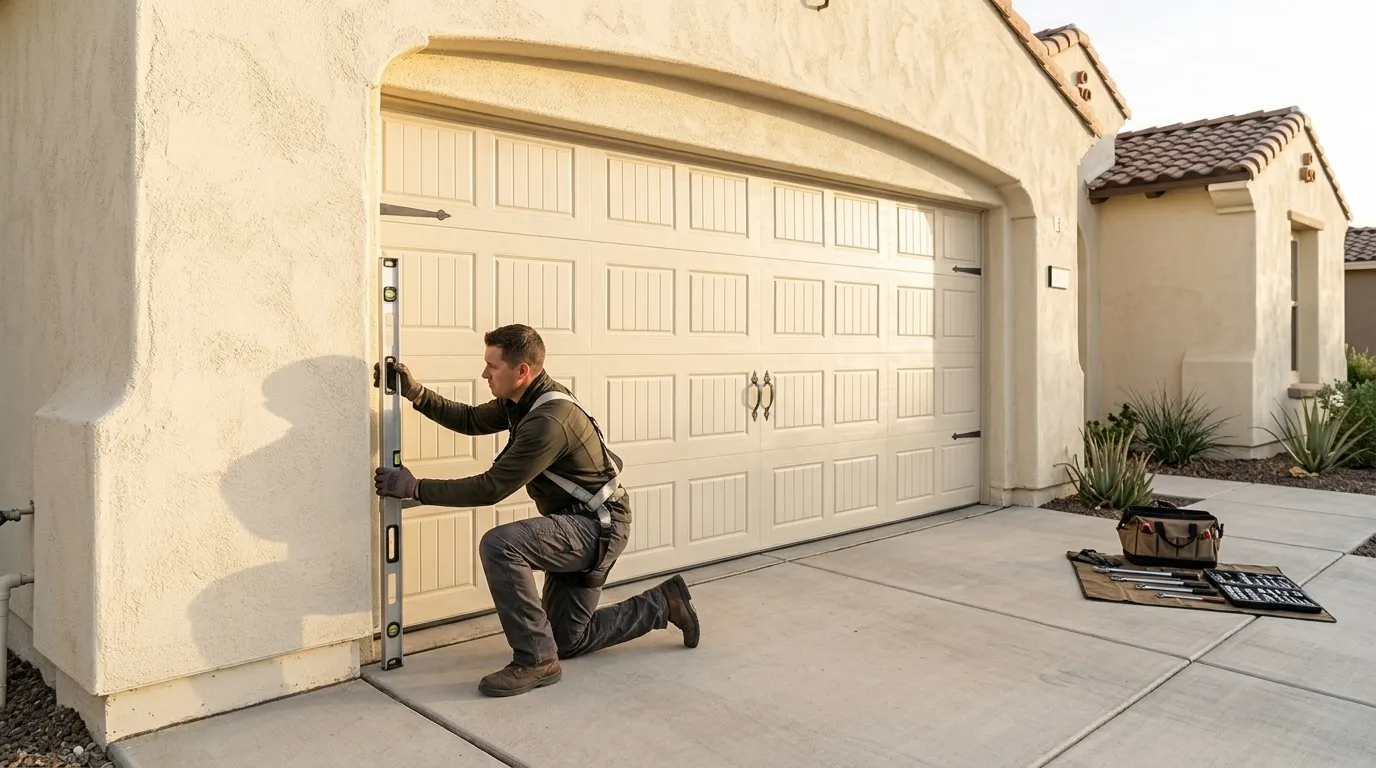
Olney sits seven miles out from Gaithersburg, and that drive is worth mentioning before anything else, because it changes how a roller call here gets scheduled compared to a job closer in. Most houses in Olney went up around 1986, a decade or so after the service area's overall median build year of 1980, so what you're working with is more likely factory steel rollers riding on nylon-lined track than the older one-piece doors you'd find in some of the earlier-built pockets closer to Gaithersburg's core. Swapping one worn nylon roller yourself is realistic if you can get the door up on a winter latch safely and the track isn't bent - pull the roller stem out of the bracket, slide the new one in, done. Where DIY stops making sense is a full ten-roller set with track realignment. If the door is out of square or the track brackets have shifted, a roller swap alone won't quiet it down, and forcing new rollers into a bent track just wears them out again in months. That's the honest limit: we can walk you through a single roller over the phone, but a full set on a door that's binding needs eyes on the track first.
We don't quote a number here without a job in front of us, and we're not going to guess one for a page. What we can say is what drives the cost up or down. Nylon rollers are the cheaper option and the ones most builders used through the 1980s and 90s boom that shaped this part of the county. Steel rollers with sealed bearings cost more per unit but outlast nylon by years, especially through the region's cold winters. Olney's median household income runs near $171,766, well above the wider service area's $139,953, and that shows up in the mix of calls - more Olney owners ask for the sealed-bearing steel set up front instead of starting cheap and upgrading later. Across the full service area's 281,761 households, most of the roller jobs we see are still on nylon; the newer, higher-income stock out here skews toward steel from the start. The other cost variable is whether it's one roller or a full set - replacing rollers in pairs or all ten keeps wear even, but we won't push a full set on you if two rollers are doing the job fine.
A roller swap is one of the shorter jobs on the truck. Pulling and replacing a full set of ten rollers, checking the track for square, and running the door through a few cycles to listen for the noise coming back doesn't take long once the truck is on site. Because the truck comes from Gaithersburg, seven miles out, a straightforward roller job in Olney still fits into a single stop on the schedule without cutting the work short - it's a short enough drive that it doesn't eat into the time on the door itself. What can stretch the visit is discovering the noise isn't the rollers at all - a bent track, a loose hinge, or a bracket that's pulled away from the jamb will add time because those get fixed before we call the job done. We'd rather find that out and tell you than replace rollers and have you call back in a month with the same squeak.
The most common miss on a roller call is treating the squeak as the whole problem when it's really the track. With 11,843 households in Olney built mostly through the 1980s and 90s expansion, we run into a lot of doors where the track brackets were never re-torqued after the house settled, and a roller swap alone won't quiet a door that's really a bracket problem. Cold snaps make this worse - this region sits in a cold, severe winter band, and cheap nylon rollers that have gone brittle over a few winters can shatter under the added strain of a track that's slightly out of alignment, taking the bearing surface with them. The other place this goes wrong is mixing roller types on the same door - steel on one side, worn nylon on the other - which loads the opener unevenly and shows up later as a stripped gear or a chain that jumps. If you're hearing a grinding sound rather than a squeak, that's usually the bearing already gone, and by then the stem has likely scored the track, which means the fix is bigger than rollers alone.
Most residential doors run eight to ten rollers, two per section on a standard four-panel door plus the ones at the top and bottom sections. If even one roller is worn unevenly, it throws off how the door rides in the track, so we usually check the full run rather than just the one making noise.
No. If most of the set is in decent shape and only one or two are worn, replacing just those is fine. We only push for a full set when the wear is even across all of them, since mixing old and new on a door that gets used daily just means you're back to this same job again soon.
Yes, if they're nylon. This area sits in a cold, severe winter climate band, and nylon gets brittle with repeated freeze cycles. Steel rollers with sealed bearings handle the cold better and are usually the better call if your door sees a lot of winter use.
Call now or request a free quote - same-day service on most repairs, upfront written pricing.