Gaithersburg, MD · Garage Door Service
Montgomery Village homes built around 1980 are hitting the end of their original door and spring life. Gaithersburg Garage Door Pros installs new doors built for our winters.
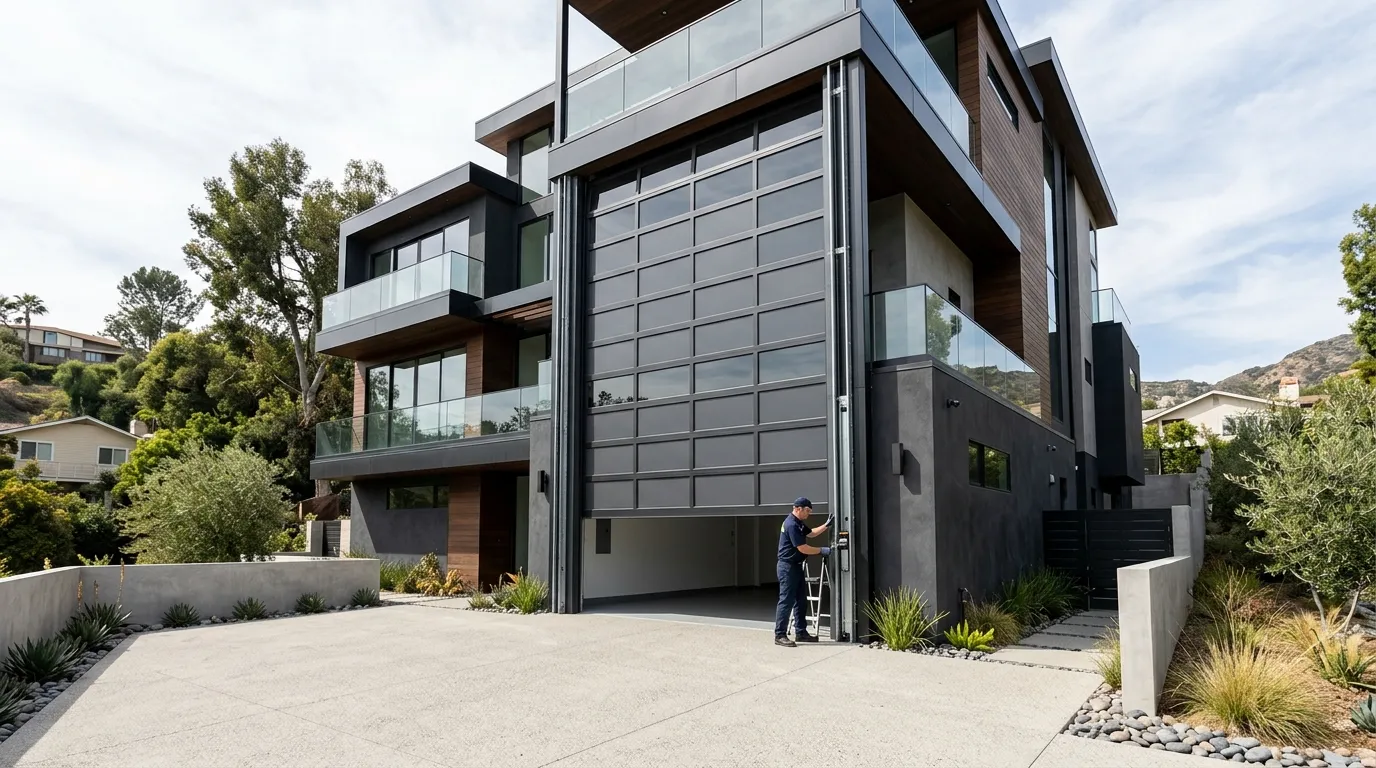
Most of the calls we get from this side of the county are the same shape: the door still opens, but it's tired in a way that's hard to name until you're standing in front of it. Montgomery Village's housing stock centers on 1980, which puts a lot of these garages right at the edge of a hard cutoff in the industry. Openers and doors built before 1993 didn't require the photo-eye safety sensors that are now standard on everything sold - so if your opener has never been swapped, there's a real chance it's running without one. That's not a scare line, it's a federal safety standard (UL 325) that simply didn't exist yet when a lot of these houses were built.\n\nThe doors themselves tend to be single-layer steel, no insulation, hung on the extension-spring hardware that was common through the 80s and 90s rather than the torsion setup most new doors use. Extension springs age differently than torsion springs - they stretch and fatigue rather than fail cleanly, so by the time a panel starts sagging on one side, the springs are usually already past done. When we're quoting new installs in this area, that's the pattern we're pricing around, not a generic \"door replacement.\"
We don't have a published price list for this page, so we won't put a number here that we can't stand behind on the day. What we can tell you is what moves the number: whether you're keeping the existing track and header framing or replacing it, whether the opener gets swapped at the same time, and whether the old door is steel, wood, or something we need to haul out in pieces.\n\nMontgomery Village's median household income runs lower than the wider Gaithersburg service area - roughly $96,487 here against $139,953 across the full territory we cover. We mention that because it shapes the jobs we actually see: fewer full custom builds, more straightforward single-door and double-door replacements on houses where the original door has simply run its course. We'll walk the door with you before we quote it, and if a repair genuinely makes more sense than a full replacement, we'll say so instead of upselling a new install you don't need.
For an install job we bring insulated steel doors in standard 8 and 9-foot widths, torsion spring assemblies to replace the aging extension springs, new track and rollers, and openers that meet current safety standard with working photo-eye sensors. Given the cold-severe climate rating for this part of Maryland, we default to doors with a real thermal break and weatherstripped bottom seals rather than the bare single-panel steel a lot of these houses still have - winter is where an uninsulated door costs you the most, both in comfort and in condensation on the inside of the panel.\n\nWe don't stock every specialty size on the truck. Custom widths, carriage-style wood doors, and odd historic openings sometimes mean a lead time on the door itself, even though the labor and hardware are the same. If your opening is standard, we can usually turn the job in one visit; if it's not, we'll tell you that up front rather than promise a date we can't hit.
We work out of Gaithersburg and cover Montgomery Village as part of that service area - it's about 3 miles from our base, so there's no separate branch here, just a truck that comes over. You can see the full list of communities we reach from our service area page, and if you're comparing installation against other work we do out of Gaithersburg, that's covered on our Gaithersburg installation page. Booking is the same process either way - we look at the door, measure the opening, and quote before anything gets ordered.
A torsion spring conversion or a full door swap is not a solo weekend project, and we'll say that plainly. Torsion springs store enough force to break a bone or worse if you don't know the winding procedure, and getting a new door square in an opening framed in 1980 - when tolerances and lumber sizing weren't what they are now - is harder than the online tutorials make it look.\n\nWhat you can reasonably do yourself: clean and lubricate rollers and hinges, check that the bottom weatherstrip still seals against the slab, and watch for a door that reverses unevenly, which usually means one spring is going before the other. If you see daylight under one corner of a closed door, that's your sign the springs are unbalanced - worth a call before it becomes a full failure.
On a straightforward single-door replacement - standard width, existing track salvageable, opener staying - the labor itself usually runs a single visit. Add an opener swap, a double-door job, or framing that needs squaring up because the house has settled since 1980, and it stretches longer. We don't guarantee a same-day turnaround on this page because that depends on the door size we need to bring and whether it's a stock width or something we have to order.\n\nThe honest limitation here: if your opening is a non-standard size, or the header above the door has shifted enough that the frame itself needs rebuilding, we're not going to force a stock door into it just to close the job fast. That's the kind of shortcut that comes back as a callback in six months, and it's not worth it for either of us.
If your house and door date to around 1980, which is the median build year here, there's a good chance your opener predates the 1993 photo-eye safety standard (UL 325). Even if the door itself still opens fine, an opener without that sensor is worth replacing alongside the door rather than reusing.
We carry standard 8 and 9-foot insulated steel doors and torsion hardware on the truck out of Gaithersburg, so most standard-size jobs can be scheduled without a long wait. Custom widths or specialty styles usually mean ordering the door itself, which adds lead time even though the install labor doesn't change.
Extension springs, common on houses from this era, fatigue gradually rather than snapping cleanly. If one side of the door hangs lower when closed or the opener strains more on one side, the springs are wearing unevenly. That's worth a look before one fails outright and the door drops.
Call now or request a free quote - same-day service on most repairs, upfront written pricing.