Gaithersburg, MD · Garage Door Service
Panel replacement for Damascus, MD homes, most built around 1983. We drive out 8 miles from Gaithersburg to match steel gauge and match faded finishes on 1980s doors.
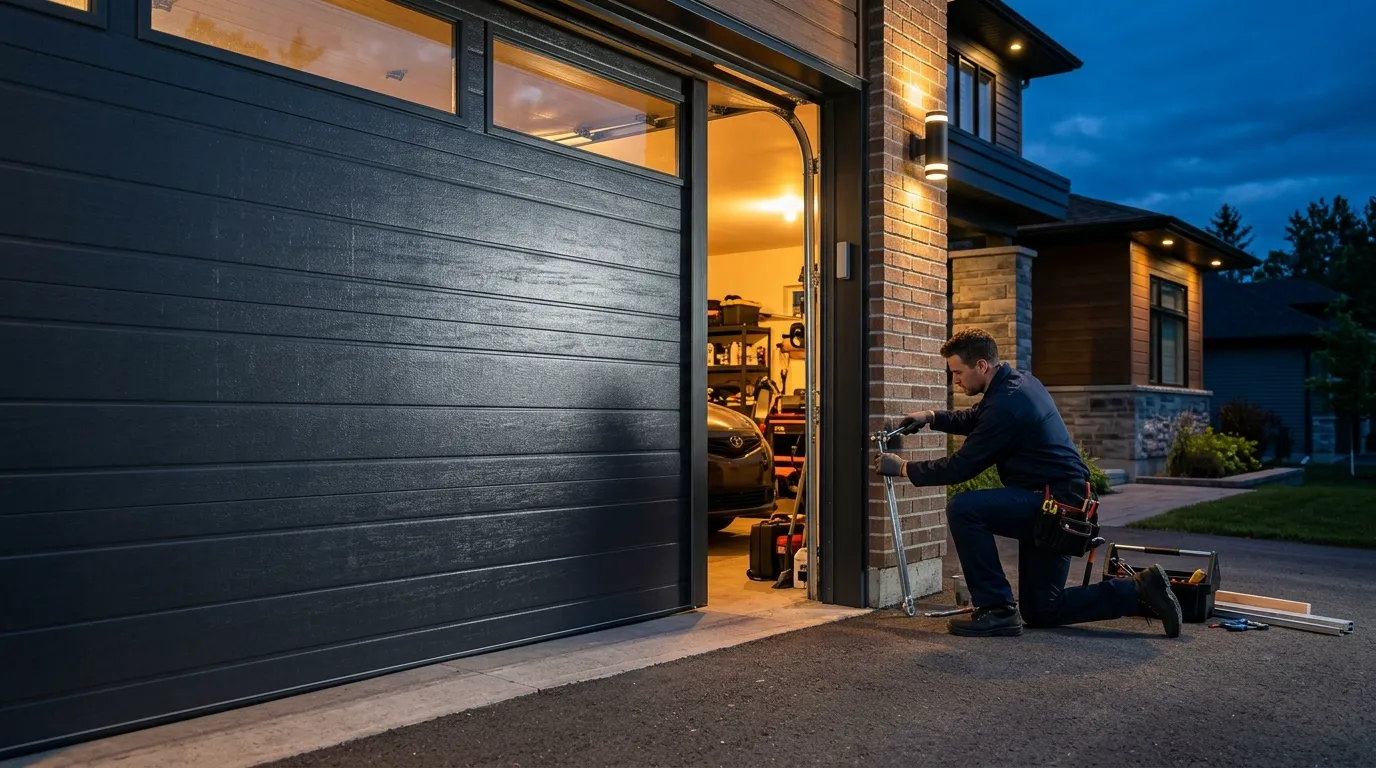
Damascus has about 5,836 households, which is small enough that a lot of the panel damage here comes from the same handful of causes: a trailer backed in wrong, a basketball hoop mount that clipped the top section, or a section that finally gave out after thirty-plus years of freeze-thaw cycles. If you're set on doing this yourself, know what you're taking on. A single panel swap on a sectional door is straightforward if the door is a common size and the manufacturer still stocks that profile. Pulling the wrong hinge bolt on a torsion-spring door under tension is not a beginner mistake you get to make twice. If the damaged section carries a spring anchor bracket, or if the door is old enough that the manufacturer has changed its panel profile since it was built, ordering the wrong part is the most common way this job turns into two trips instead of one. We're not going to tell you it can't be done in a driveway. We're telling you the failure mode is expensive, not dangerous-looking, until it is.
Most of what we replace panels on in Damascus went up around 1983, which puts these doors solidly in the era where steel sectional doors with roll-formed panels became standard, replacing the older one-piece tilt-up style. That's good news for parts availability compared to homes built before 1960, but it still means matching a panel that's been fading and chalking under UV for four decades. We measure the section height and width, match the panel profile (ribbed, raised, flush), and check whether the color has drifted enough from the factory shade that a full-door repaint makes more sense than a mismatched patch. On insulated doors from this build era, we also check the polystyrene or polyurethane core thickness before ordering, since aftermarket panels aren't always a drop-in match. We travel out from Gaithersburg for this job, about 8 miles, and we bring the section and hardware with us once we've confirmed the match rather than guessing on-site.
We don't quote a number here because panel cost swings hard on three things: how close a stock replacement panel is to your existing profile, whether the section has an insulated core or is just steel skin, and whether we're replacing one section or matching color across the whole door. A single non-insulated bottom panel on a common size is a different job than sourcing an insulated top section with a matching window cutout on a door that's been discontinued. Damascus's median household income here runs higher than the surrounding service area, at $153,994, which sometimes means owners lean toward a full-door replacement rather than patching an aging panel, especially once we're into a second or third repair on the same door. That's a decision worth making with real numbers in front of you, not a phone quote.
The sideways version of this job almost always starts with hardware, not the panel itself. On doors built in the early 1980s, we regularly find hinges and rollers that were never upgraded, so pulling one damaged section reveals a stretched hinge or a roller track that's worn oval instead of round. Swap the panel without addressing that, and the new section binds within a season. The other way this goes wrong is color. A panel ordered to match a faded 1983 door by paint code alone often comes back visibly brighter than the rest of the door, because factory colors on doors this old have UV-shifted more than most owners expect. We check both before we order, not after.
The complaint we hear is usually simple: a dent, a crack, or a section that's buckled inward and won't sit flush when the door closes. Sometimes it's daylight showing through a seam that used to be tight. On a door from this build era, that gap often isn't just cosmetic - it's a sign the section is no longer holding its shape under wind load, which matters more here than in a milder climate because our winters run cold and severe enough to stress a compromised panel further with ice weight and contraction. If the door still opens and closes on track despite the damage, the fix is usually contained to that one section. If the track is pulling out of square, the panel is a symptom, not the problem.
The reason panel failure shows up differently here than in newer subdivisions comes down to build era. Damascus's housing stock centers on 1983, squarely in the range where the wider service area's stock (built 1948 through 2015, median around 1980) shifted from one-piece and early sectional doors to the steel sectional designs that became standard through the 1980s and 90s. Doors from that window have had four decades of cold-severe winters to work on them: steel fatigues at the hinge points, and factory paint chalks and shifts color faster than modern powder coats. Combine that with our climate's freeze-thaw cycle, and a panel that looks like a cosmetic dent often has a hairline crack running along a hinge line you can't see until the section is off the door.
We try, but doors from the early 1980s have usually faded and chalked enough that a factory-matched panel comes back visibly different. We'll tell you upfront if a color match isn't realistic and whether a full-door repaint or replacement makes more sense than a patch that stands out.
We don't stock every profile - we confirm the exact section size and profile at your home before ordering, since manufacturers have changed panel designs multiple times since the 1980s. That means panel jobs usually take a second visit once the part is confirmed.
Often yes, if the rest of the door and hardware are sound. But if you're on your second or third panel repair on the same aging door, replacing the whole door can end up cheaper than chasing more single-section fixes.
Call now or request a free quote - same-day service on most repairs, upfront written pricing.